An inbound marketing strategy for B2B SaaS connects buyer research, useful content, discovery channels and relevant next steps to qualified sales opportunities. Start with one customer segment and one measurable funnel problem. Use the first 90 days to establish a baseline, improve priority pages and test whether qualified buyers progress.
In a March 2026 release, Gartner reported that 67% of surveyed B2B buyers preferred an experience without a sales representative, while 45% had used AI during a recent purchase. The findings came from 646 buyers surveyed in August and September 2025. They support making independent research easier, without assuming every buyer wants to avoid sales.
SaaS Marketing Gurus (SMG) provides B2B SaaS marketing services, including SEO, content marketing and Generative Engine Optimization (GEO). The plan below is a recommended working sequence. Its checkpoints help teams decide what to improve next; they are not promises of growth within 90 days.
What Should Your Inbound Marketing Strategy for B2B Prioritize?
Your inbound marketing strategy for B2B should prioritize the obstacle preventing suitable buyers from progressing. Choose that obstacle using customer research, funnel data, your sales model and the resources available to act.
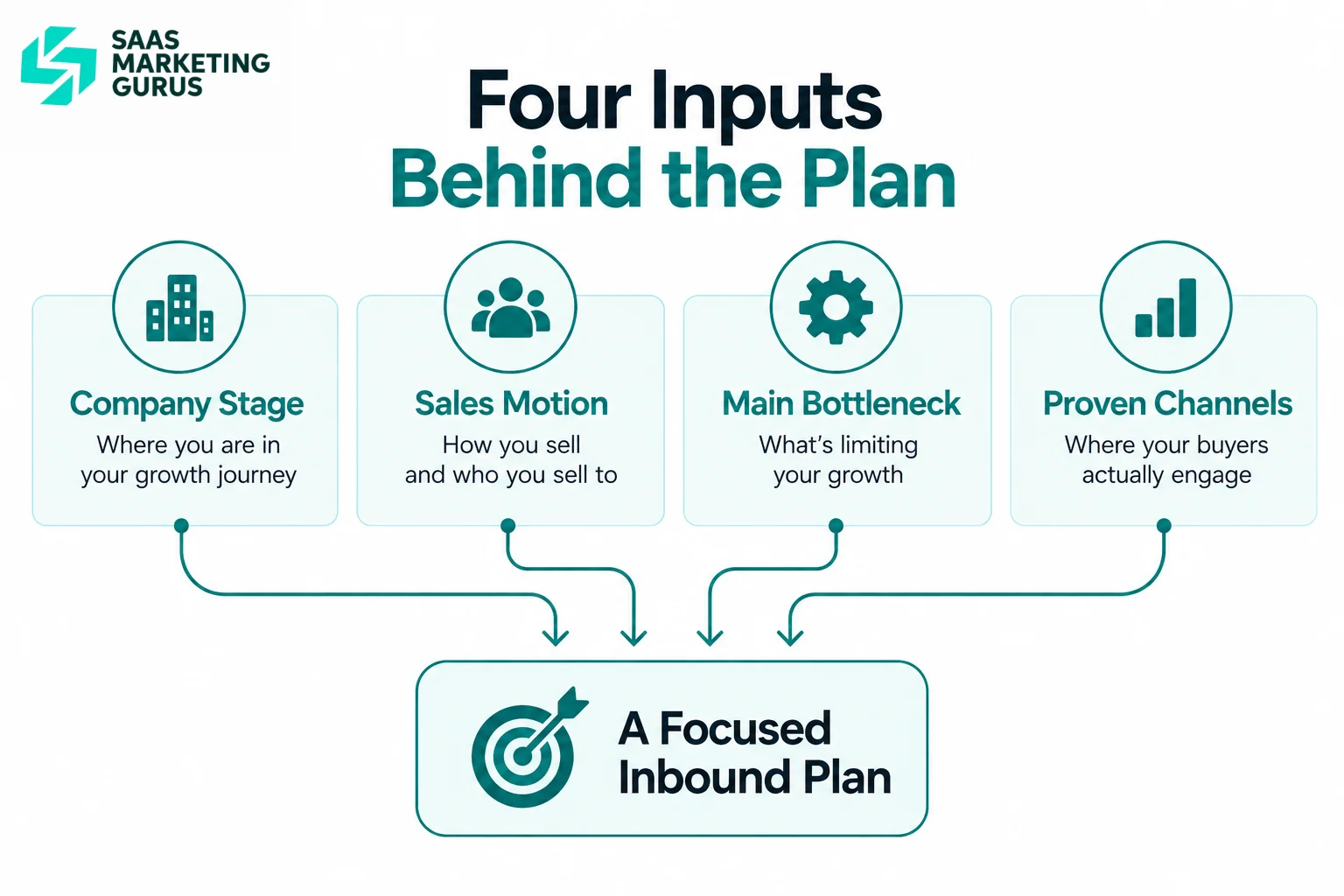
Four inputs help narrow the decision:
- Company stage: If demand is unproven, investigate buyer problems before scaling content. If demand exists, examine where suitable prospects drop out.
- Sales motion: A trial journey needs product education and activation support. A demo journey needs qualification, evaluation content and a clear sales handoff.
- Main bottleneck: Low relevant traffic suggests a discovery problem. Relevant visits without enquiries suggest a messaging, offer or conversion problem.
- Channel evidence: Start where qualified buyers already engage. If no channel has evidence, test one discovery channel before expanding.
Connect these choices to your broader B2B SaaS marketing strategy. Define an ideal customer profile, meaning the company type most likely to benefit from the product, then identify the people involved in its buying decision.
CMI’s 2026 research, published in October 2025, found that 39% of respondents selected resource constraints among their top three content challenges. That makes capacity a practical planning constraint.
Use your SaaS marketing budget to account for research, writing, expert review, development, distribution and reporting. Assign an owner to each task before setting publishing deadlines.
How to Build an Inbound Marketing Strategy for B2B in 90 Days
Build the first 90 days around three outputs: a verified baseline, a connected set of buyer resources and a review of qualified buyer progress. Diagnose during days 1 to 30, build during days 31 to 60, then distribute and improve during days 61 to 90.
Treat these periods as planning checkpoints. Work already supported by customer evidence does not need to wait for the next phase.
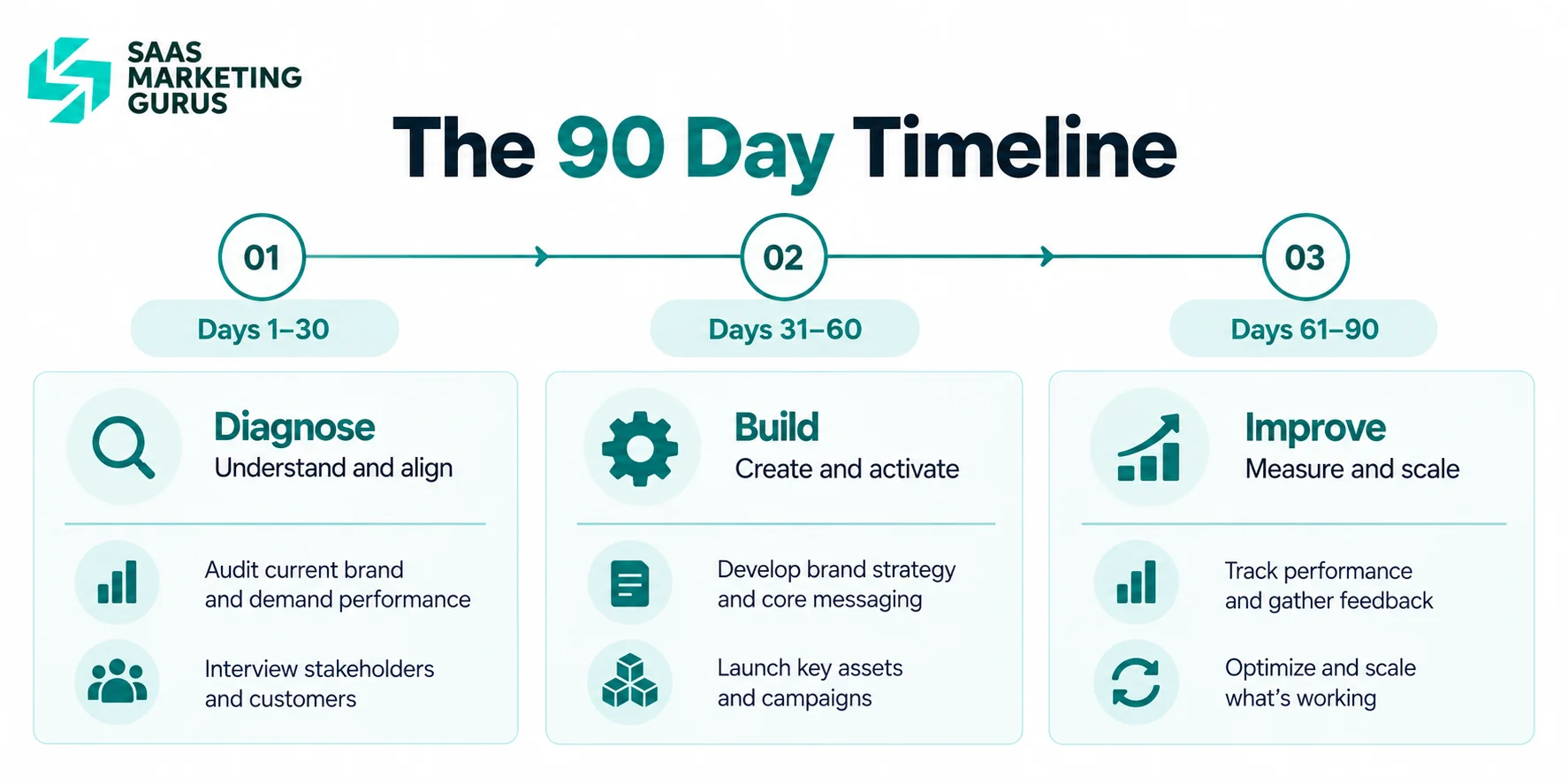
Days 1 to 30: Diagnose Before You Publish
Use the first month to identify the buyer problem, the weakest conversion step and the evidence needed to choose an intervention.
Interview recent customers and lost prospects. Ask what triggered their search, which alternatives they considered and what information delayed the decision. Review sales calls for recurring questions from users, finance approvers and technical reviewers.
Use Google Search Console to inspect search visibility, website analytics to examine page activity, and your customer relationship management system to review lead outcomes. A B2B SEO audit can support the search and content diagnosis, while CRM records show what happened after an enquiry.
Agree with sales on a qualified lead definition. For example, a prospect might need to match your target company size, have a relevant use case and request a buying conversation. A newsletter subscription alone would not meet that definition.
Finish the month with a baseline, a short priority list and a named owner for each change. Check that form submissions, trial signups and demo requests are recorded correctly before interpreting performance.
Days 31 to 60: Build for Each Decision Stage
Use the second month to fill the information gaps that prevent your chosen buyers from evaluating the product or taking the next step.
Map content to buyer questions rather than producing every format at once:
| Buyer question | Useful content | Relevant next step |
|---|---|---|
| What is causing this problem? | Diagnostic guide or checklist | Explore a matching use case |
| Which approach fits our team? | Comparison with clear selection criteria | Review product capabilities |
| Will this work in our setup? | Integration, migration or security guidance | Request a technical discussion |
| Can we justify the purchase? | Verified case study or cost explanation | Start a trial or request a demo |
Illustrative HR SaaS example: Suppose suitable prospects hesitate because they cannot tell whether employee records can be migrated from their current system. Publish a migration guide covering supported data, responsibilities, limitations and the steps involved, using verified product information.
Link the guide from relevant comparison and product pages. Offer a migration discussion where buyers need help, then record whether migration uncertainty remains an objection in subsequent sales conversations.
For topic selection, use SMG’s CLARITY framework to assess customer problems, intent, search result fit, revenue relevance, page value, topic connections and measurement. Update an existing page when it already serves the same purpose.
Days 61 to 90: Distribute and Improve
Use the final month to put the content in front of suitable buyers and examine whether it helps them move forward.
Choose distribution based on the audience you identified. Share a practical extract on LinkedIn, answer relevant community questions within community rules, and send useful follow up content to subscribers who requested it. Give sales the resources that answer objections in active opportunities.
Define what happens after each conversion. A demo request needs an assigned owner and an agreed response window. A trial signup needs guidance toward a meaningful product action, while a guide download may need further education.
For AI search, Google’s May 2025 guidance emphasizes distinctive, useful content and a good page experience. Apply that advice through clear answers, accurate product details and evidence readers can inspect. It does not guarantee inclusion in AI answers.
At day 90, review lead quality, progression and recurring objections with sales. Continue changes supported by useful evidence, revise those that attract unsuitable enquiries, and extend the observation period when the sample is too small.
What Results Should You Track?
Track whether suitable buyers move from discovery to enquiry, qualification and purchase. Separate activity metrics from business outcomes, and define each measure before comparing periods.
| Measure | Working definition | Decision it supports |
|---|---|---|
| Relevant organic visits | Organic sessions reaching pages intended for your target buyers | Whether discovery reaches the intended content |
| Enquiry conversion rate | Enquiries attributed to eligible sessions ÷ those sessions × 100 | Whether the conversion path needs investigation |
| Qualified leads | Enquiries meeting your agreed fit and intent criteria | Whether marketing attracts suitable prospects |
| Sales opportunities | Qualified prospects accepted into an active sales process | Whether leads progress beyond initial interest |
| Pipeline and revenue | Opportunity value and closed revenue, reported separately | Whether activity contributes to commercial outcomes |
Record trial activation separately if your product offers a trial. Define activation as a meaningful product action, such as completing a first workflow, rather than simply signing in.
Suppose one landing page receives 500 eligible sessions and generates 10 enquiries in a month. Its enquiry conversion rate is 2%. If sales accepts three enquiries as qualified, the qualification rate is 30%.
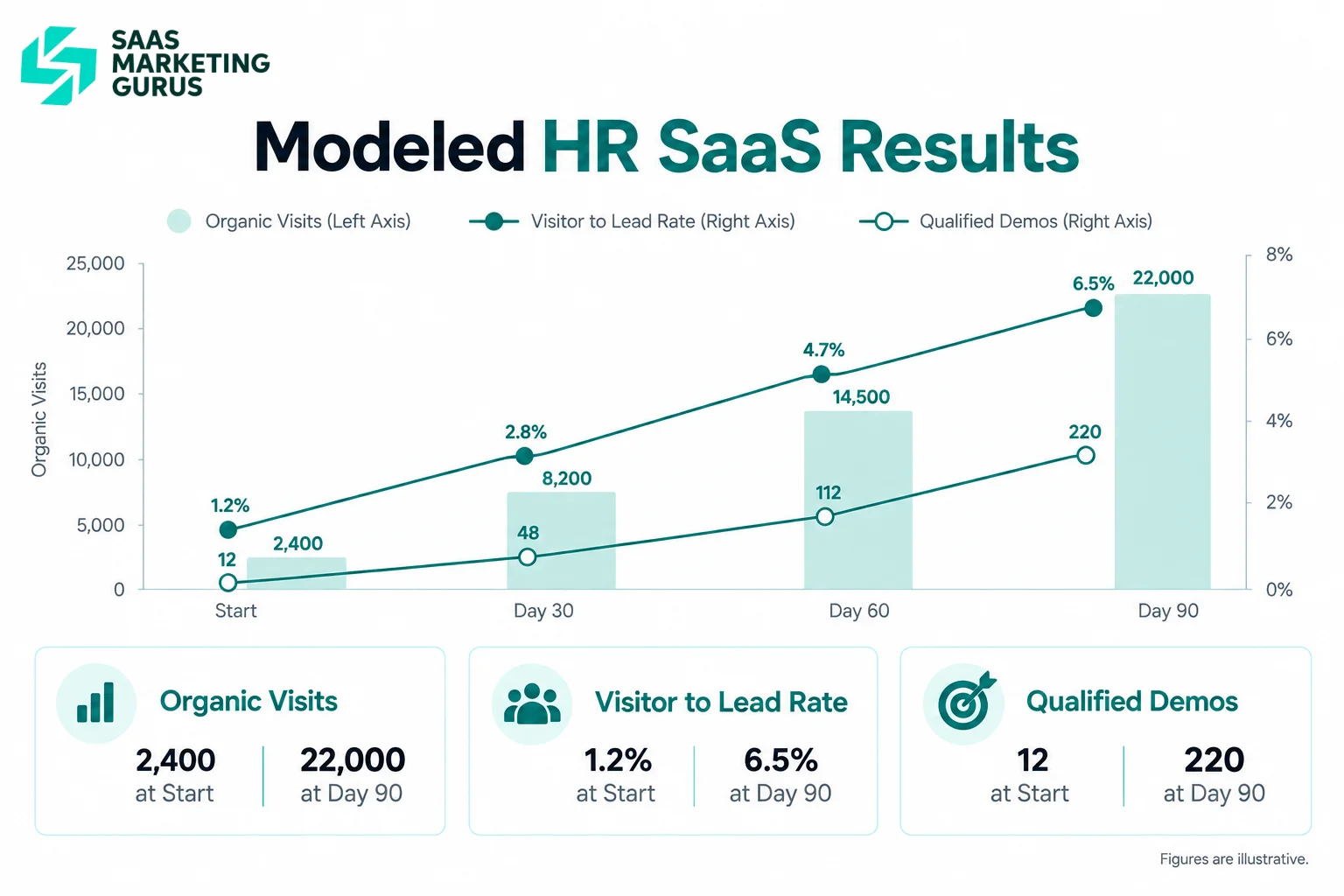
If enquiries later rise but qualified leads stay flat, investigate audience fit and the offer before producing more content. If qualified leads increase but opportunities do not, examine response time, unresolved objections and the handoff to sales.
Use consistent reporting periods and distinguish traffic sources. Record campaign tags where available, connect enquiries to CRM records, and ask prospects how they discovered you to supplement incomplete attribution. These records can show associations, but they do not prove that one page caused a sale.
Compare acquisition costs using clearly defined spending and customer cohorts. New content costs may occur well before associated revenue, so a single month can give an incomplete picture.
Start With One Clear Pipeline Goal
Start your inbound marketing strategy for B2B by fixing one observable gap in a real buyer journey. Choose a priority page or conversion path, record its baseline, assign an owner and agree on the buyer action you want to improve.
At day 90, decide whether to continue, revise or stop the work using qualified lead progression and sales feedback. If traffic is too low or the sales cycle is longer, extend the review period rather than declaring success from a small change in visits.
If you need help deciding what to fund next, book a free consultation with SMG. Bring your priority pages and available funnel data for a review of current performance and a roadmap for the next stage of your inbound plan.
FAQ
What Is a B2B Inbound Marketing Strategy?
A B2B inbound marketing strategy helps business buyers discover, evaluate and choose a solution through useful content and relevant experiences. It connects SEO, content distribution, conversion paths and follow up to specific buying needs. For SaaS, the journey can also include trial activation and customer education.
How Long Does B2B Inbound Marketing Take to Show Results?
B2B inbound marketing has no fixed result timeline. Use the first 90 days to establish tracking, improve priority content and assess early buyer progress. Revenue evaluation depends on traffic volume, sales cycle length and the work completed. A small sample of enquiries cannot establish a reliable growth trend.
Why Does Inbound Marketing Fail for B2B SaaS Companies?
It often fails because content is not tied to a clear buying decision or conversion path. Weak feedback between marketing and sales can also hide problems with lead quality.
How Much Should a B2B SaaS Company Budget for Inbound Marketing?
Set an inbound budget from the work required and the resources your team already has. Include research, content production, expert review, development, distribution and reporting. Fund a focused test with a defined buyer group and success measure before expanding across channels. There is no universally suitable spending percentage.
Should B2B SaaS Companies Combine Inbound and Outbound Marketing?
B2B SaaS companies can combine inbound and outbound when both support the same buyer group. Outbound can introduce a relevant problem or offer, while inbound resources help prospects evaluate it. Share content and sales feedback across both activities, and define attribution rules so the same opportunity is not counted twice.