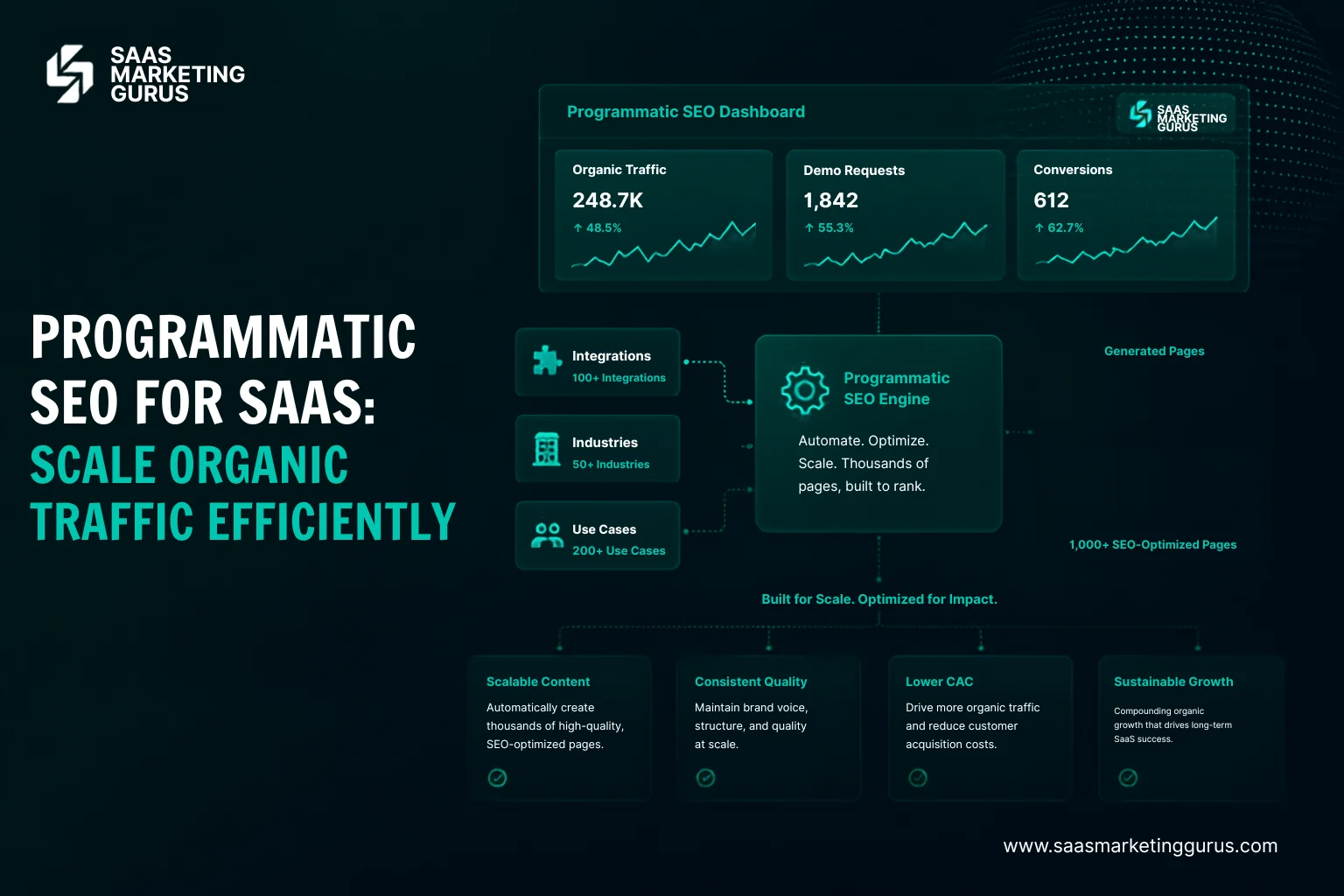
Programmatic SEO is a strategy that uses structured data, reusable templates, and automation to create useful pages for repeatable search queries. Instead of writing every page manually, SaaS companies can build page systems around integrations, industries, features, comparisons, use cases, and customer workflows.
This approach works best when a SaaS product has clear keyword patterns and enough unique data to make every page useful. Queries such as “CRM software for SaaS startups” and “Slack integration with project management tools” can show specific product needs and stronger buying intent.
A complete SaaS SEO strategy can combine manually created authority content with scalable landing pages. The goal is to expand search coverage while giving every page accurate information, a clear purpose, and a useful next step.
Automation alone is not a strategy. Publishing hundreds of similar pages will not produce lasting results unless the pages answer real questions, use reliable data, and provide information that changes based on the query.
Key Takeaways
- Programmatic SEO works when one valuable page structure can serve many related search queries.
- Each page needs reliable data, clear differentiation, useful content, and a relevant conversion path.
- SaaS teams should launch pages in controlled groups, review indexation and conversions, and improve or remove weak pages.
Why Programmatic SEO Matters for SaaS
SaaS companies face two major challenges: competition for high-value keywords and rising customer acquisition costs. Ranking for competitive terms such as “CRM software” or “marketing automation platform” can require significant time, authority, and investment. SEO growth systems allow companies to capture long-tail search traffic at scale, targeting queries with lower competition and higher intent.
| Search Query | User Intent |
|---|---|
| CRM software | General research |
| CRM software for startups | Specific solution search |
| CRM software with automated follow-ups | Feature-based buying intent |
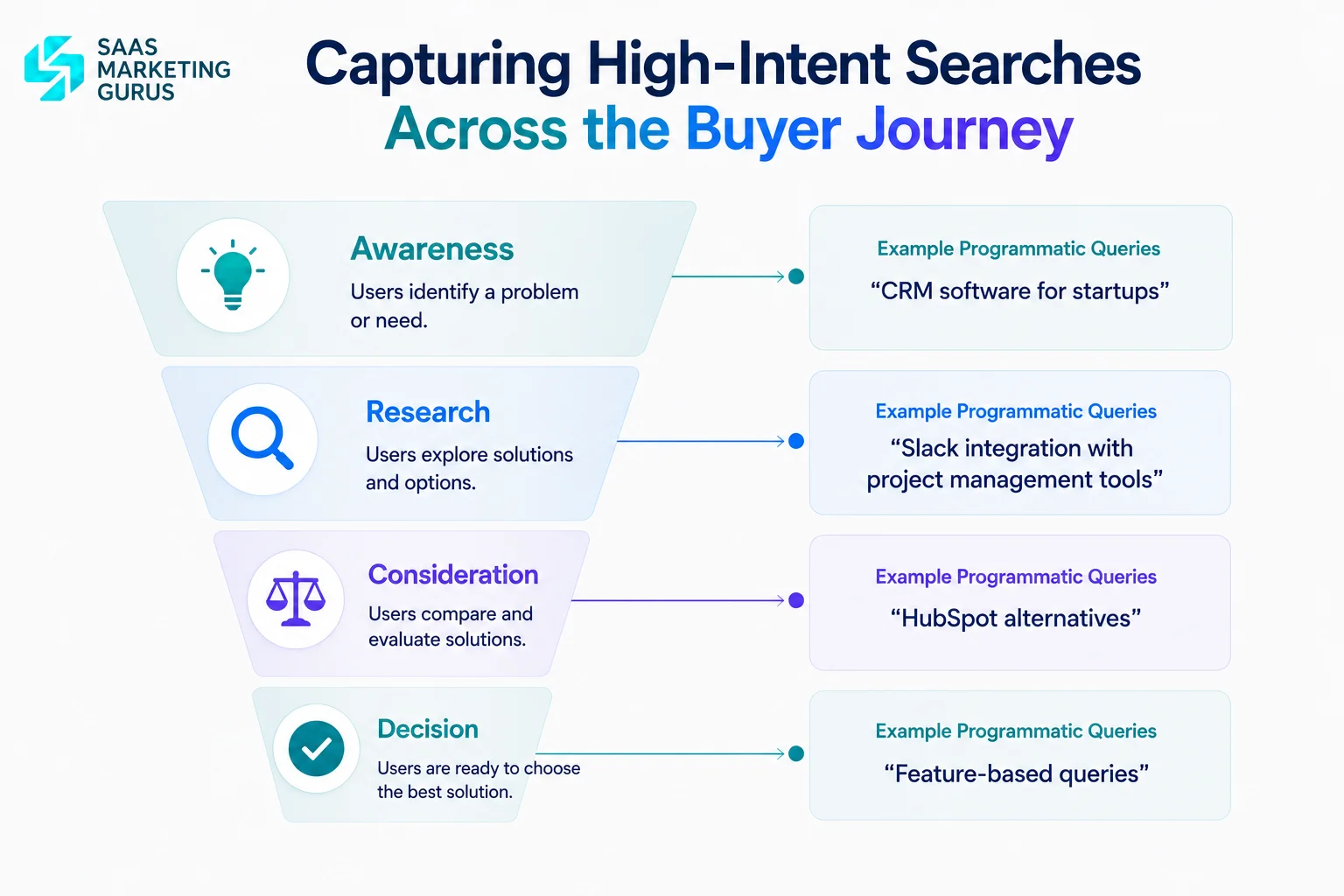
This layered approach captures users across the funnel, from research to near-purchase. Several well known companies use this model across integrations, templates, comparisons, and location based pages:
- Zapier generates thousands of integration pages that solve workflow problems for specific tools.
- Canva scales template pages for resumes, presentations, and social media designs.
- G2 produces comparison pages that match users researching software alternatives.
- Wise creates location- and currency-specific landing pages for international transfers.
- HubSpot builds scalable educational and template resources to attract leads.
Each of these examples emphasizes quality over quantity: automation amplifies a strategy rooted in user intent, not superficial keyword variations.
How Does Programmatic SEO Differ From Traditional SEO?
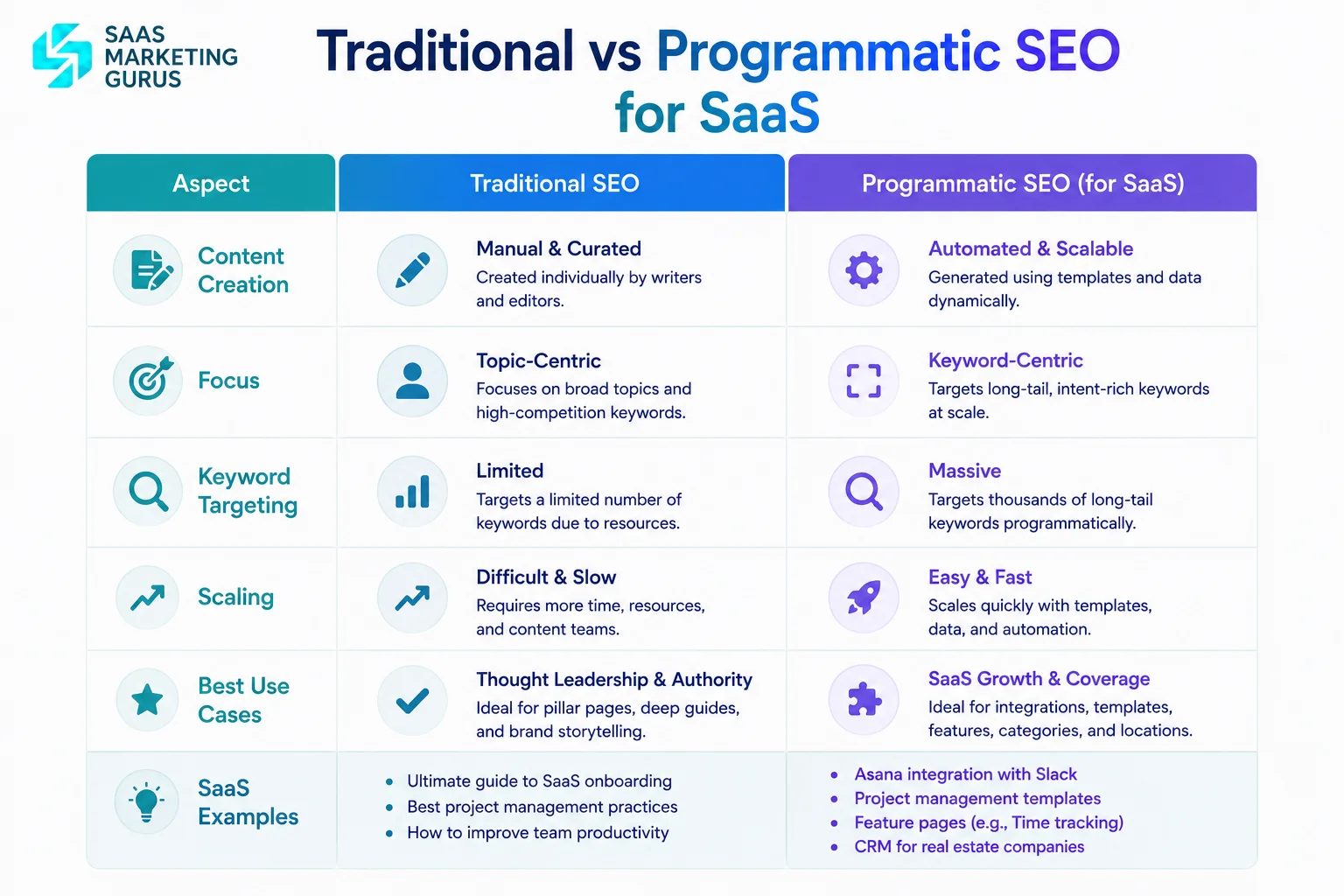
Traditional SEO and programmatic SEO serve different parts of a SaaS search strategy. The table below compares how each approach creates content, targets keywords, and supports growth.
| Area | Traditional SEO | Programmatic SEO |
|---|---|---|
| Content creation | One page at a time | Multiple pages via templates and structured data |
| Focus | Authority | Search coverage |
| Keyword targeting | Broad topics | Long-tail queries |
| Scaling | Limited | High, system-based |
| Best use cases | Guides, blogs, thought leadership | Integrations, comparisons, templates, industry pages |
Both approaches work better together. Traditional content builds topic depth and authority, while programmatic pages expand coverage across repeatable, high intent searches.
How Do You Build a Programmatic SEO Strategy for SaaS?
A programmatic SEO system connects keyword demand, verified data, page templates, technical controls, and conversion tracking. Use the following process before generating pages.
1. Find a Repeatable Keyword Pattern
Start with a head term and identify modifiers that create useful variations.
Examples:
- CRM software for [industry]
- [tool] integration with [tool]
- [competitor] alternatives for [team type]
- [feature] software for [use case]
Check several search results manually. The page format should remain similar across queries, while the information needed for each query should change.
2. Confirm Product Relevance
Do not target a large keyword set only because it has search volume. Every query should connect to a real product feature, audience, integration, workflow, or buying decision.
3. Choose a Reliable Data Source
Use product data, customer usage patterns, integration details, pricing information, public datasets, or verified research. Record the source, owner, and update date for every field.
First party data is usually the strongest option because competitors cannot easily reproduce it.
4. Design the Page Template
Separate fixed elements from dynamic elements.
Fixed elements can include:
- Navigation
- Page structure
- Explanation of the page type
- Trust information
Dynamic elements can include:
- Product name
- Industry
- Integration steps
- Feature availability
- Screenshots
- Comparison data
- Relevant examples
- Recommended next action
5. Add a Unique Value Requirement
Do not publish a page unless it contains information specific to that query. This may include a workflow, calculation, screenshot, feature comparison, data point, limitation, setup instruction, or recommendation.
6. Launch a Controlled Page Group
Publish a small group first. Review page rendering, metadata, internal links, canonical URLs, indexation, engagement, and conversions before expanding the system.
7. Review and Improve
Track which templates, modifiers, and page types attract qualified traffic. Improve useful pages, merge overlapping pages, and remove pages that cannot satisfy a distinct search need.
Which SaaS Pages Work Best for Programmatic SEO?
Programmatic SEO works best when related searches share a common structure but require different information. The table below shows common SaaS page types and what each page must add.
| Page type | Search pattern | Example | Unique value required |
|---|---|---|---|
| Integration pages | [tool] integration with [tool] | Slack integration with CRM software | Supported actions, setup steps, limitations, and workflow examples |
| Comparison pages | [product] vs [competitor] | HubSpot vs Pipedrive | Verified features, pricing context, limitations, and suitable user type |
| Alternative pages | [competitor] alternatives | HubSpot alternatives | Clear selection criteria and relevant alternatives |
| Industry pages | [software] for [industry] | CRM software for healthcare | Industry workflows, compliance needs, and practical examples |
| Use case pages | [software] for [use case] | Project management software for remote teams | Specific workflow, feature mapping, and expected outcome |
| Template pages | [task] template | SaaS onboarding email template | Editable template, instructions, and a real usage example |
The strongest pages solve a specific problem and help the reader make a decision or complete a task. A page should not exist only because a keyword variation can be generated.
How Can SaaS Companies Protect Content Quality at Scale?
Scaling weak templates creates more weak pages. Every programmatic page should pass the SMG Page Value Test before publication.
SMG Page Value Test
A page should meet all five requirements:
- Intent
It answers one clear search need.
- Evidence
It uses accurate product data, first party information, verified sources, or practical examples.
- Difference
It contains meaningful information that changes for the target query.
- Experience
It helps the reader compare, calculate, configure, decide, or complete a task.
- Action
It gives the reader a relevant next step.
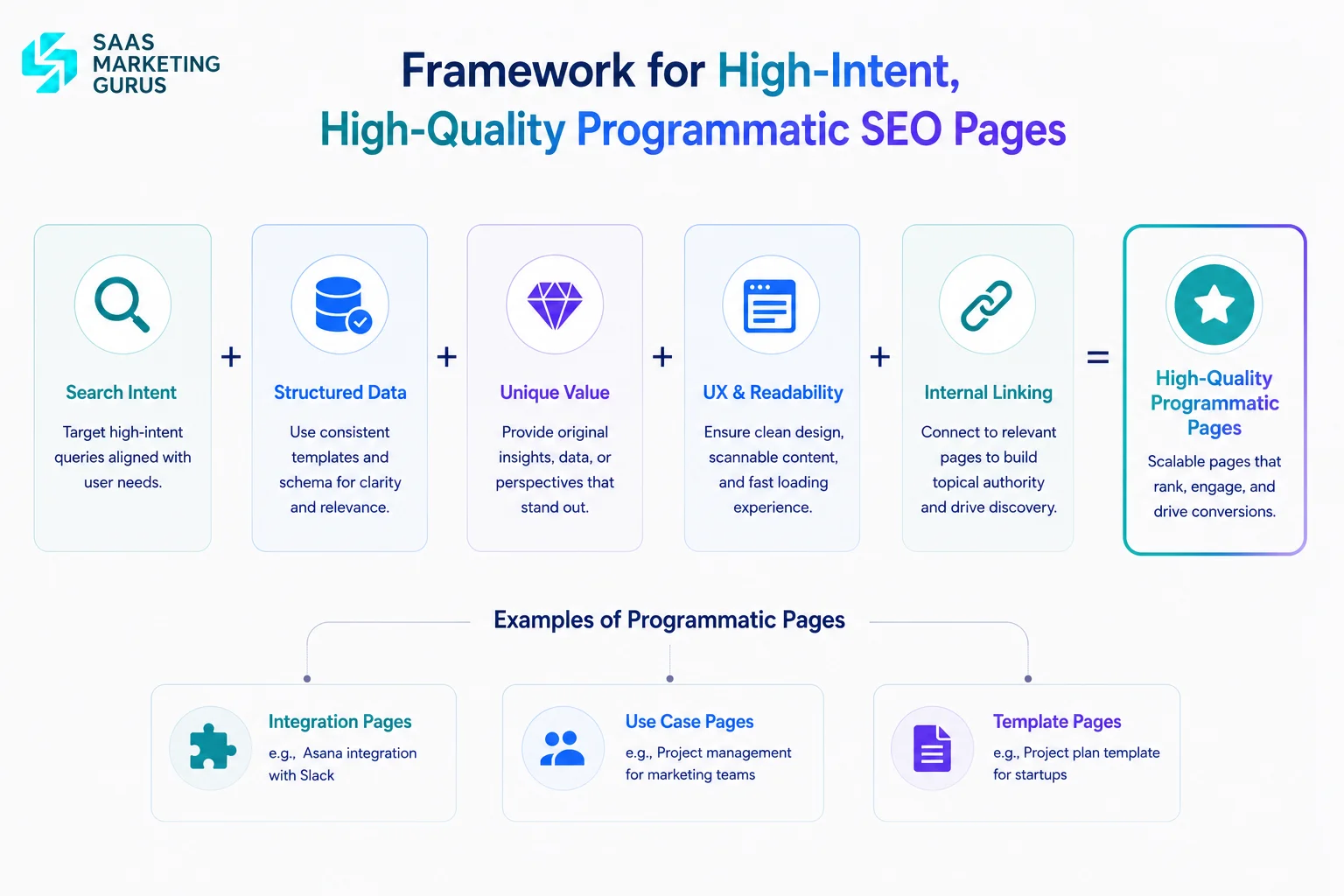
Use this formula:
Search intent + reliable data + unique value + useful experience + internal links = a qualified programmatic page
Before publishing, confirm that the page:
- Has a unique title, heading, description, and introduction
- Provides information specific to the target query
- Includes accurate links, screenshots, prices, or product details
- Loads correctly on mobile devices
- Has a self referencing canonical URL
- Links to relevant category, product, and educational pages
- Includes a clear conversion action
- Has an assigned owner and review date
What Are the Indexing and Internal Linking Best Practices?
Programmatic pages require controlled publishing and clear site architecture. Generating a page does not mean it should automatically be indexed.
Before submitting pages for indexing:
- Confirm that each URL serves a distinct search need
- Use a consistent and readable URL structure
- Add a self referencing canonical URL
- Prevent parameter URLs and duplicate versions from entering sitemaps
- Create unique titles, descriptions, headings, and visible page content
- Confirm that important content appears in rendered HTML
- Include only approved canonical URLs in XML sitemaps
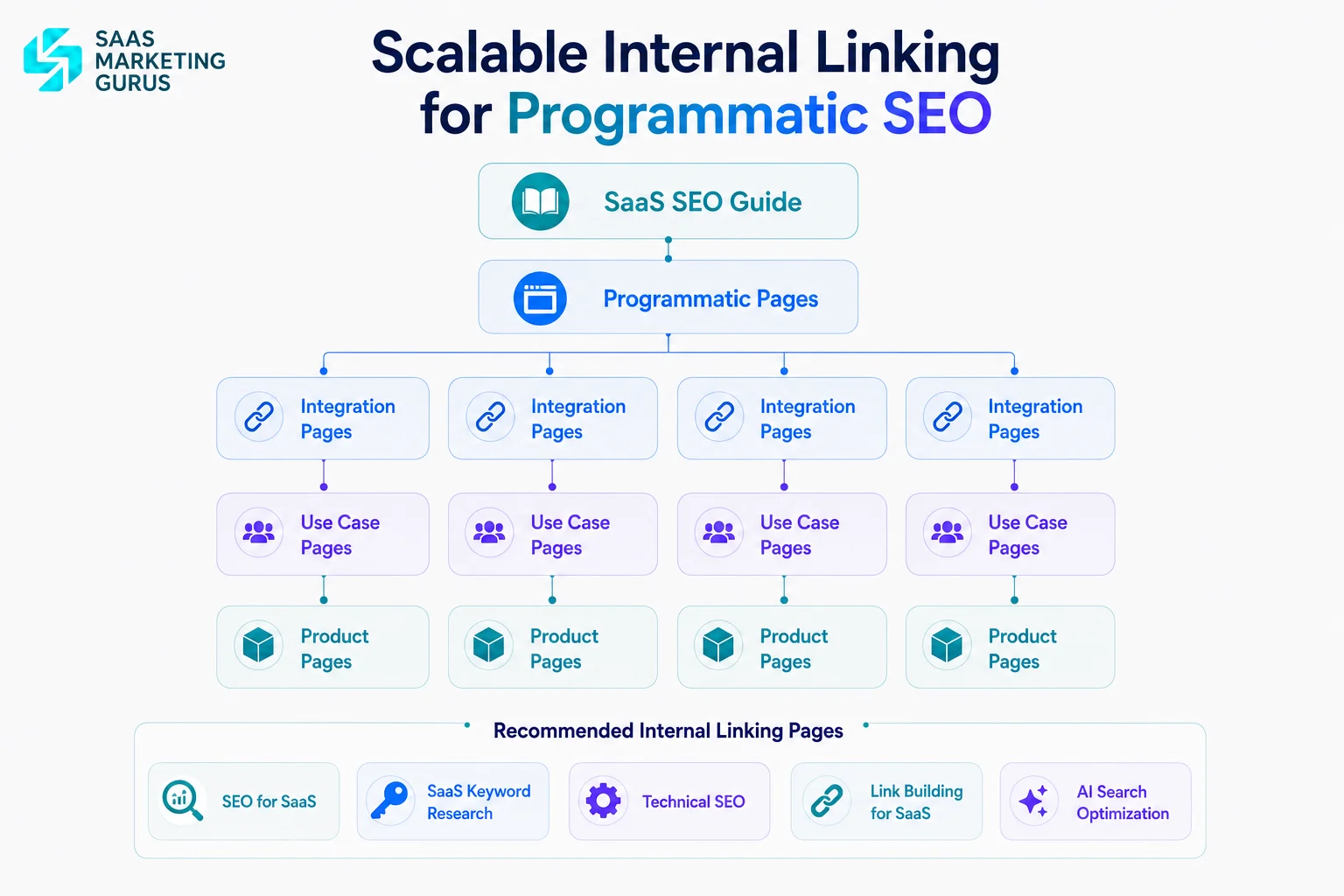
- Link pages from relevant category, integration, use case, and product hubs
- Test structured data where it accurately represents visible content
Launch pages in controlled groups. Monitor indexation, crawl errors, search impressions, engagement, and conversions before publishing more.
Review weak pages regularly. Improve pages with demand but limited value. Merge pages that serve the same intent. Remove or redirect pages that no longer have a useful purpose.
Recommended Internal Linking Structure
SaaS SEO guide
↓
Programmatic SEO hub
↓
Page type hub
↓
Individual integration, comparison, or use case page
↓
Relevant product or conversion page
Which Tools and KPIs Should SaaS Teams Track?
Use tools based on the stage of the programmatic SEO workflow.
Recommended Tools
- Ahrefs or Semrush for keyword patterns and competitor research
- Google Search Console for crawling, indexing, queries, and search performance
- GA4 for engagement, assisted conversions, leads, and revenue
- Screaming Frog for metadata, canonicals, links, status codes, and page similarity
- A database or spreadsheet for page data and ownership
- A CMS for template publishing and page updates
Recommended KPIs
| Category | KPI | What it reveals |
|---|---|---|
| Indexation | Valid indexed pages | Whether approved pages enter search |
| Excluded and duplicate pages | Technical or quality problems | |
| Visibility | Search impressions | Growth in query coverage |
| Ranking queries per page | Depth of long tail visibility | |
| Engagement | Qualified visits | Whether pages attract the right audience |
| CTA interactions | Whether users move toward a product action | |
| Conversion | Leads and trials | Direct business contribution |
| Conversion rate by page type | Which templates attract qualified users | |
| Efficiency | Revenue per indexed page | Commercial value relative to page volume |
| Quality | Pages with no impressions | Pages needing review, consolidation, or removal |
| Freshness | Outdated data fields | Pages at risk of becoming inaccurate |
Do not judge the campaign only by the number of pages or total traffic. Measure whether each page type attracts relevant searches and contributes to product discovery, trials, demos, or revenue.
When SaaS SEO Automation Is Not the Right Choice
SaaS SEO automation is not a fit for every SaaS company. Avoid it when:
- You do not have repeatable search patterns
- Your product has limited searchable use cases
- You lack unique or structured data
- Your technical SEO foundations are weak
In these cases, authority content, product education, and high-quality blog content are more effective.
Data-Driven SEO Checklist
Before scaling:
- Validate search demand
- Build structured datasets
- Create useful page templates
- Add unique value to every page
- Optimize internal linking
- Monitor indexing, rankings, and conversions
FAQs
What is programmatic SEO for SaaS?
Programmatic SEO uses structured data, templates, and automation to create useful pages for repeatable search queries, such as integrations, industries, comparisons, and use cases.
Which SaaS pages work best for programmatic SEO?
Integration pages, comparison pages, alternative pages, industry pages, use case pages, feature pages, and template pages are usually the best options.
How does programmatic SEO target long tail keywords?
It combines a core keyword with repeatable modifiers such as industry, tool, feature, location, or use case to create pages for specific searches.
Can programmatic SEO maintain content quality at scale?
Yes. Every page must answer a clear search need, use reliable data, include unique information, and offer a useful next step.
Is programmatic SEO considered spam?
No. It becomes risky when a website publishes large numbers of similar pages with little original value or creates content mainly to influence rankings.
Should every programmatic page be indexed?
No. Only index pages that have clear search demand, unique content, accurate information, and a distinct purpose.
How should SaaS companies measure programmatic SEO results?
Track indexed pages, search impressions, keyword rankings, qualified traffic, conversions, leads, and revenue by page type.
Build Smarter Systems, Not Just Pages
Programmatic SEO gives SaaS teams a way to capture specific search demand without writing every page manually. Its value comes from the system behind the pages: reliable data, useful templates, technical controls, editorial review, and clear conversion paths.
Start with one proven keyword pattern. Build a small page group, measure indexation and qualified conversions, then expand only when the template produces useful results.
Before publishing hundreds of URLs, ask one question: would this page still deserve to exist if search engines did not rank it?
SaaS Marketing Gurus can review your keyword patterns, page templates, internal linking, and indexation plan before you scale. Request a free SaaS SEO consultation to identify the safest opportunities for your product.