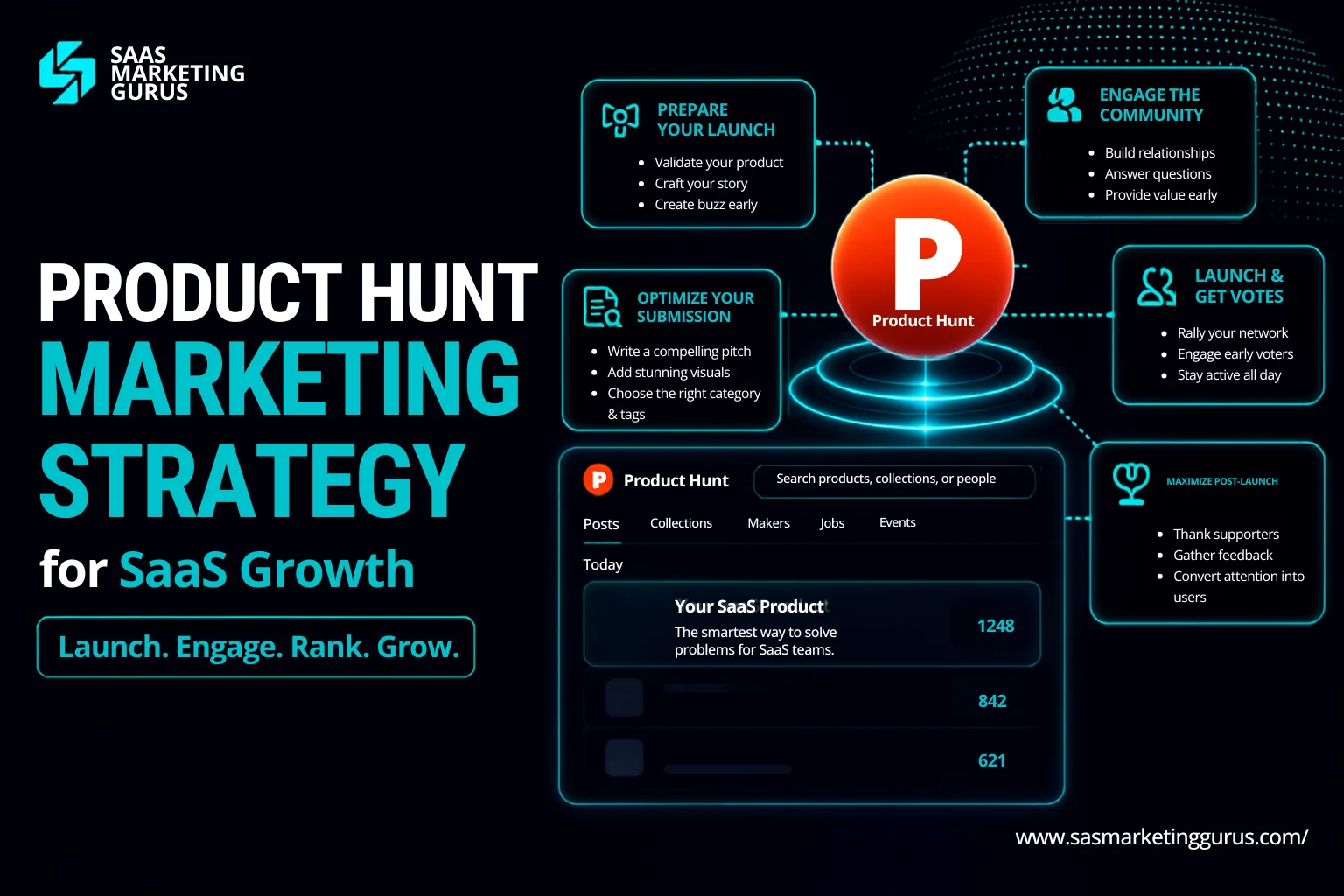
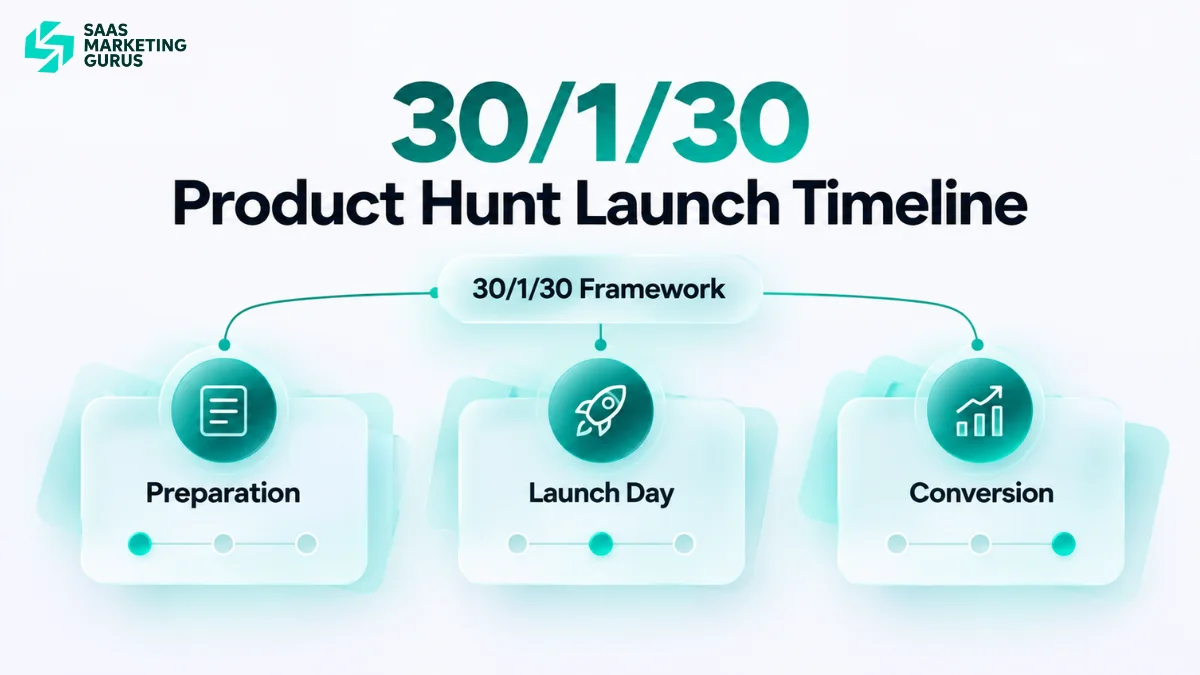
A Product Hunt launch strategy for SaaS is a 30-day plan: three weeks of preparation, one launch day, and 30 days of follow-up. This guide gives you the weekly plan, the launch-day runbook, and the metrics that show whether the launch produced customers or only upvotes. If you need the basics first, read what Product Hunt is.
SaaS Marketing Gurus (SMG), a B2B SaaS marketing agency specializing in Reddit marketing, Quora marketing, Generative Engine Optimization (GEO), SaaS SEO, and Product Hunt launches, has run 1,500+ Product Hunt launches. The plan below is the one we use.
Key takeaways
- Plan 30 days of preparation, one launch day, and a 30-day follow-up window.
- Launch only if people can try the product the same day and your buyers use Product Hunt.
- Set one measurable goal and write your ICP in one sentence before you build any asset.
- Send launch traffic to a dedicated landing page, not your homepage.
- Never ask for upvotes. Ask people to try the product and give feedback.
- Judge the launch on activation and demo requests, not on rank.
- Follow up with every commenter and signup within 24 hours.
What Does a 30-Day Product Hunt Launch Plan Look Like?
A 30-day Product Hunt launch plan has four preparation weeks, one launch day, and a 30-day follow-up window, and each stage ends with a deliverable you can check. Work backward from launch day, because Product Hunt lets you schedule a launch up to one month ahead.
| Stage | Days | Done when |
|---|---|---|
| Week 1 | Day -30 to -24 | One primary goal, a written ICP, an active Product Hunt profile, and a scheduled launch date |
| Week 2 | Day -23 to -17 | Tagline, description, gallery, and first comment drafted |
| Week 3 | Day -16 to -10 | Dedicated landing page live, signup and tracking tested, warm list segmented |
| Week 4 | Day -9 to -1 | Roles assigned, replies drafted, outreach queued, full dry run complete |
| Launch day | Day 0 | Live at your chosen time, every comment answered, feedback logged |
| Follow-up | Day +1 to +30 | Follow-up emails sent, activation tracked, goal reviewed on day 30 |
Treat the follow-up window as part of the launch. Product Hunt says you can promote your launch page for two weeks after launch day before moving to your permanent Product Page. For how this plan fits a wider channel mix, see SMG’s Product Hunt marketing strategy for SaaS.
Is Product Hunt Worth It for a B2B SaaS Product?
It is worth it when three things are true: people can try your product on launch day, your buyers overlap with Product Hunt’s audience of founders, developers, marketers, and other early adopters, and you have a goal you can measure. If one is missing, fix it before you pick a date.
| Your situation | Launch on Product Hunt? | Why |
|---|---|---|
| Free trial, freemium, or self-serve demo is live | Yes | Visitors can try the product while they are interested |
| Buyers are founders, developers, marketers, or ops leads | Yes | They make up most of the audience |
| Enterprise product, sales-led, no self-serve access | Not yet | Traffic has nothing to try. Start with Reddit marketing and marketplace listings |
| Waitlist only, product not live | Not yet | Launch day traffic needs a working product |
| Major new version of an existing product | Yes, if the update is significant | A relaunch works when there is real news to share |
| No goal and no ICP sentence | Not yet | You cannot tell whether the launch worked |
A launch gives you a spike of early users and a round of product feedback. It does not replace search, Reddit, or review sites, because buyers who evaluate later look there. Plan Product Hunt as the validation step inside a wider go-to-market plan, then connect it to your B2B SaaS marketing strategy.
Not sure if a featured launch matters? See featured vs non-featured launches on Product Hunt.
How Do You Set a Launch Goal and Define Your ICP?
Set one primary goal tied to a business outcome, then work backward to the traffic and conversion rate it needs. Product Hunt advises measurable goals tied to your company goals and says rank is far from the only way to measure success.
Here is an illustrative example. A goal of 20 demo requests at an assumed 2% visit-to-demo rate needs about 1,000 qualified visitors. The 2% is a placeholder, so replace it with your own landing page rate.
Then name the buyer in one sentence. An AI customer support tool should target support teams buried in repetitive tickets, not everyone curious about AI tools. Use that sentence to filter every asset and outreach list that follows.
Sharp positioning also strengthens your SaaS product marketing, because visitors see the problem you solve within seconds.
What Do You Need to Prepare for Your Product Hunt Listing?
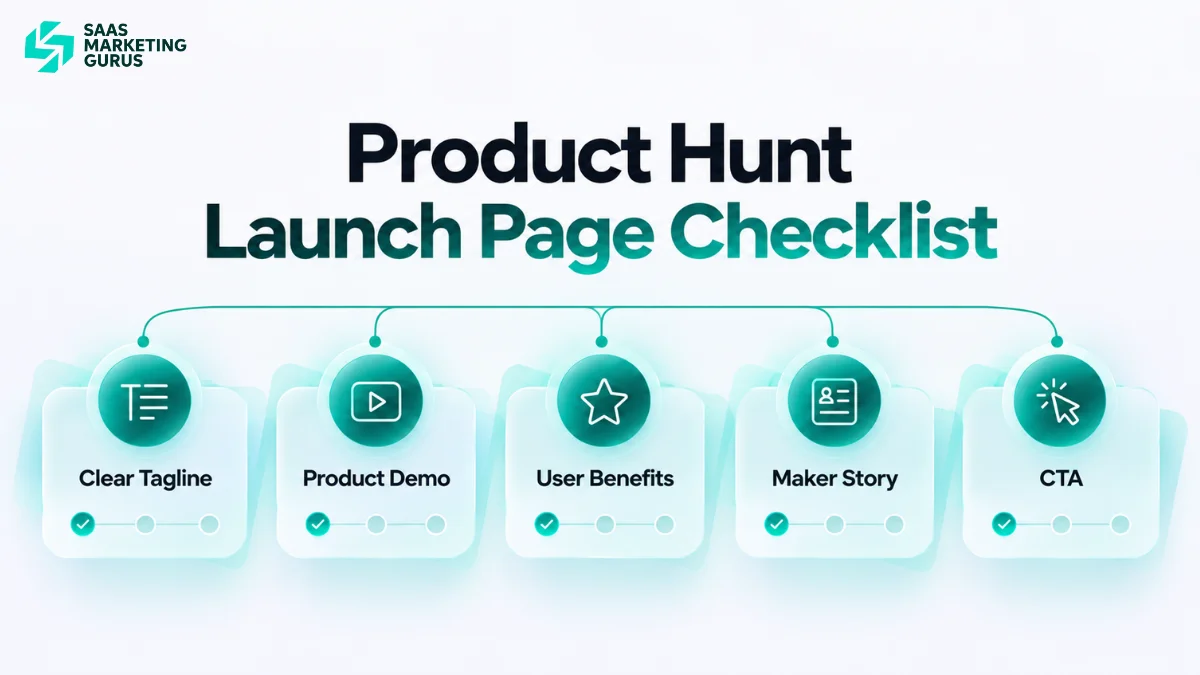
Your listing needs a product name, a tagline of 60 characters or fewer, a description, at least two gallery images, and a first maker comment that explains who the product is for. Product Hunt reports that 70% of products that reached Product of the Day, Week, or Month included a maker’s first comment (Product Hunt launch guide, checked October 2026).
| Field | Product Hunt requirement | What to write |
|---|---|---|
| Name | Product name only, no slogans or emojis | The exact product name |
| Tagline | 60 characters maximum | Audience plus outcome |
| Description | 500 characters maximum | Problem, who it is for, one proof point |
| Launch tags | Up to 3 | The closest categories |
| Thumbnail | Square, 240×240 recommended, under 3MB | An image readable at small size |
| Gallery | 2+ images, 1270×760 recommended | The product solving the problem |
| Product URL | Shortened and tracked links not accepted | A clean, dedicated landing page URL |
A weak tagline is “AI productivity platform.” A stronger one is “AI assistant that turns customer calls into tasks,” because it names the audience and outcome in 49 characters. Adding “and follow-ups” would push it past the 60-character limit.
Because Product Hunt does not accept tracked links in the product URL field, send launch traffic to one dedicated landing page and measure that page on its own. Give it a single call to action, since Product Hunt suggests a focused landing page and says launch-day offers can lift engagement. Set up GA4 key events for signup and demo booking now and test them end to end, because you cannot rebuild launch-day data later.
For the first comment, cover who the product is for, why you built it, the feedback you want, and any launch offer. Ask for feedback, not upvotes.
How Do You Build a Launch Audience Without Breaking Product Hunt’s Rules?
Build your audience through real relationships and ask supporters for feedback, never upvotes. Product Hunt says asking for upvotes is against its policies, and it says paying a hunter or promoter goes against its guidelines. Products caught breaking the rules can be unfeatured or removed, and makers risk a permanent ban.
Start in week 1 and work through these steps:
- Join early. New accounts wait one week to post, and Product Hunt recommends joining three months or more ahead, so activate your account today.
- Help others first. Comment on other launches and discussions before you ask for support.
- Warm your list: customers, beta users, newsletter subscribers, and industry contacts.
- Use communities where you already take part. Product Hunt warns against spamming Reddit if you have never posted there, so see SMG’s subreddit targeting strategy.
- Hunt your own product. Per Product Hunt, 79% of featured posts and 60% of #1 Product of the Day winners were self-hunted.
Ask for visits, comments, and feedback. Skip contests that reward upvotes, because Product Hunt may unfeature a product that runs one.
What Should You Do on Product Hunt Launch Day?
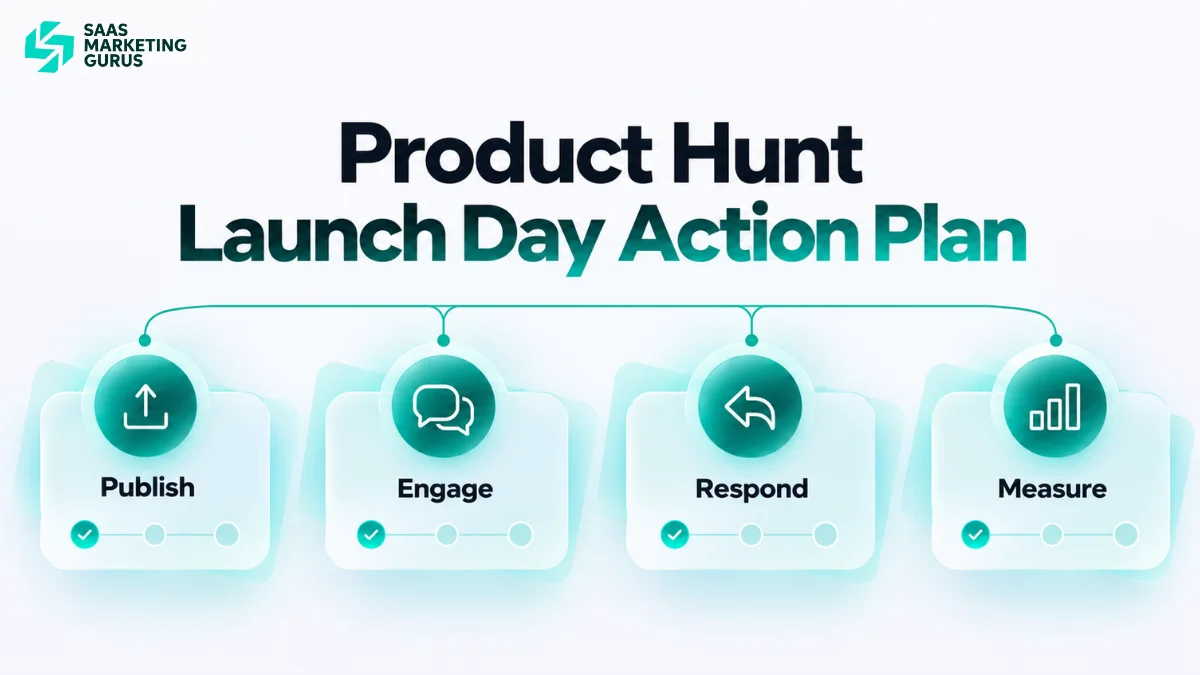
On launch day, go live at 12:01 am Pacific unless you have a reason not to, answer every comment as fast as your team can, and log feedback for the product team. Product Hunt’s homepage runs on a 24-hour Pacific cycle, so 12:01 am gives you the full day. Product Hunt also notes that teams outside the U.S., or teams tied to a press embargo, may choose another time.
Do not treat Tuesday to Thursday as a rule. Product Hunt says there is no golden-ticket answer on timing, and it reports that weekend launches get 15% more Visit button clicks than weekday launches (Product Hunt launch guide, checked October 2026). Weekdays bring larger companies, so pick the day you are most prepared.
| Time (PT) | Action | Owner |
|---|---|---|
| 12:01 AM | Go live, post the first comment | Founder |
| First hours | Reply to every comment, log feedback themes | Founder and product |
| Morning | Email your list, announce where you are already active | Marketing |
| Afternoon | Second push with a new angle, answer questions, fix reported bugs | Whole team |
| End of day | Record visitors, signups, and demo requests against your goal | Marketing |
SMG saw the value of fast replies in WorkHub’s launch, where replies within the first hour went with more discussion and stronger signups. The WorkHub Product Hunt launch case study has the full breakdown. Not every launch is featured, and featuring changes homepage visibility, so read SMG’s guide to featured vs non-featured launches before launch day.
What Moves Your Ranking on Launch Day?
Product Hunt does not publish its ranking formula, so plan around what you control:
| Factor | What you do |
|---|---|
| Early engagement | Go live at 12:01 AM Pacific, when the launch day starts, and have your team online for the first hours |
| Comment quality | Reply to every comment with a specific answer, not a thank-you |
| Genuine users | Invite people who would use the product. Votes from accounts with no history can be discounted |
| Product page | Tagline, gallery, and first maker comment explain the use case in the first screen |
The full explanation of how Product Hunt works is in what Product Hunt is.
How Do You Turn Product Hunt Traffic Into Customers After Launch?
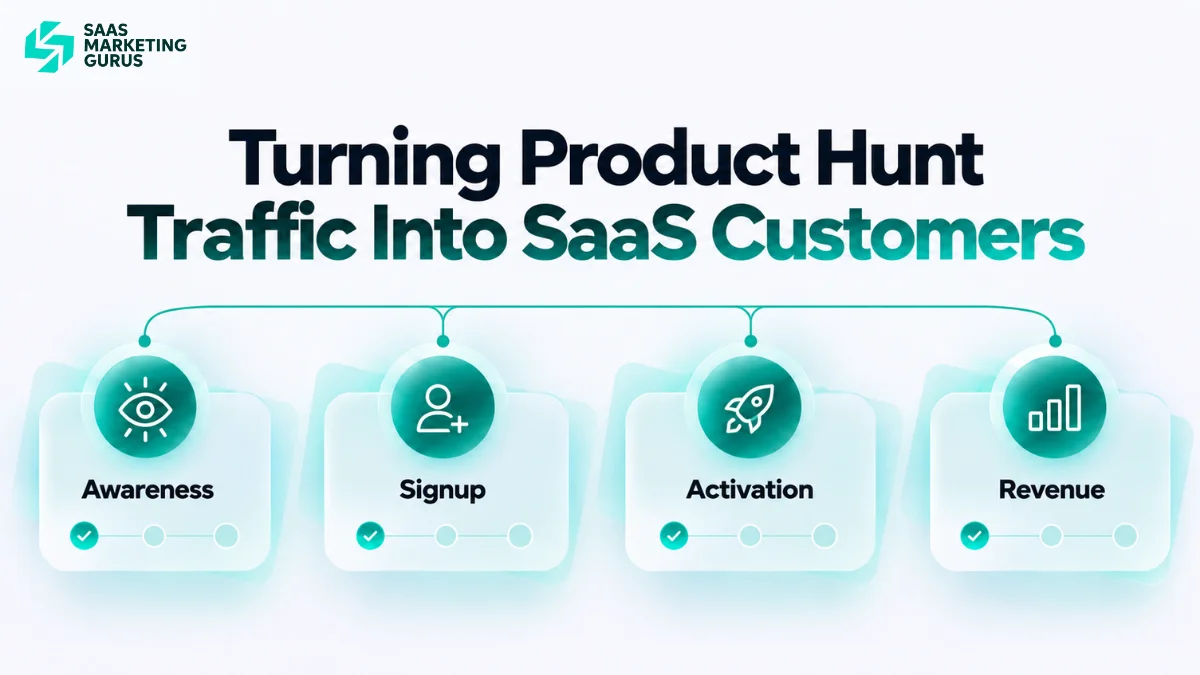
Launch day produces signups. The 30 days after produce customers. Tag every launch link with UTM parameters (utm_source=producthunt, utm_medium=launch, utm_campaign=your-launch-name) so you can separate Product Hunt visitors from everyone else in your analytics.
The follow-up window
| When | What to do |
|---|---|
| Within 24 hours | Reply personally to every commenter and email every signup with one question: what were you trying to do? |
| Day 2 to 3 | Post a thank-you with the top three lessons and ship any quick fix people asked for |
| Day 7 | Contact signups that match your ICP and offer a short demo or onboarding call |
| Day 14 | Publish a launch recap and a changelog entry covering what you changed because of feedback |
| Day 30 | Compare results to the goal you set before launch and decide what to repeat |
The metrics that matter
| Metric | How to calculate it | If it is weak |
|---|---|---|
| Signup rate | Signups divided by Product Hunt visitors | Fix the landing page headline and the first screen |
| Activation rate | Signups who complete the first key action divided by signups | Shorten onboarding to one clear first step |
| ICP match rate | Signups from target accounts divided by all signups | Tighten the tagline and first comment to your buyer |
| Demo-request rate | Demo requests divided by activated signups | Add a demo CTA inside the product and in the day 7 email |
| Trial-to-paid rate | Paid accounts divided by trial signups at day 30 | Follow up with activated users who have not upgraded |
Rank and upvotes are not on this list. A top-five finish with a 0% activation rate is a bad launch. A mid-table finish with a 40% ICP match rate is a good one.
If you want the follow-up run for you, see our Product Hunt marketing service.
Which Product Hunt Launch Mistakes Cost SaaS Teams the Most?
| Mistake | What happens | Fix |
|---|---|---|
| Asking for upvotes | Breaks Product Hunt’s rules and risks discounted votes | Ask people to try the product and share feedback |
| Launching with nothing to try | Visitors leave without signing up | Have a trial, freemium plan, or live demo ready |
| Sending traffic to the homepage | Visitors do not see an offer built for launch day | Build a dedicated landing page |
| Tracking rank instead of signups | You celebrate a result that did not produce customers | Set one measurable goal before launch |
| No ICP sentence | The tagline and comment attract the wrong users | Write who the product is for in one sentence |
| Going quiet in the comments | Engagement drops and the page loses momentum | Reply to every comment, fast, with specifics |
| Paying for hunters or vote contests | Violates the rules and brings users who never activate | Spend the budget on assets and audience building |
| Treating launch day as the campaign | Signups go cold within a week | Run the 30-day follow-up window above |
Product Hunt vs BetaList vs Indie Hackers
| Platform | Best for | Traffic pattern | When to use it |
|---|---|---|---|
| Product Hunt | Live products with something to try | Spike on launch day, then a long tail | When you can staff a full launch day |
| BetaList | Early-stage products collecting beta users | Slower, steady signups | Before launch, to build a first user list |
| Indie Hackers | Founder stories and product feedback | Ongoing, thread-based discussion | When you want feedback from other builders |
Product Hunt reaches people who explore new products. Buyers who compare tools later rely on Reddit threads, review sites, and AI answers, so pair the launch with Reddit marketing and marketplace listings.
Build Your Product Hunt Launch Strategy Around Day 30
The launch is day one of the work that counts, not the finish line. Prepare for three weeks, run launch day from a runbook, and spend the next 30 days turning signups into demos.
SMG has run 1,500+ Product Hunt launches. If you want the 30 days run for you, see our Product Hunt marketing service or book a free strategy call. The call is 30 minutes and ends with a launch plan you can use with or without us.
Frequently Asked Questions
What is a Product Hunt launch strategy?
A Product Hunt launch strategy is a plan that covers preparation, launch day, and follow-up. It sets one goal, defines the ICP, builds the listing and landing page, runs launch day from a schedule, and tracks signups and demos for 30 days afterward.
How long should you prepare for a Product Hunt launch?
Plan 30 days. Use the first three weeks to set the goal, build the listing assets and landing page, and warm up your audience. Use launch day to engage, and the 30 days after to follow up.
What is the best time to launch on Product Hunt?
Go live at 12:01 AM Pacific, when the launch day starts, so your product is visible for the full day. Have your team online for the first hours, because early comments and replies set the pace.
Do you need a hunter to launch on Product Hunt?
No. You can post your own launch. A well-known hunter does not change your product page and does not replace a good tagline, gallery, and first comment.
Can you ask for upvotes on Product Hunt?
No. Asking for upvotes breaks Product Hunt’s rules and can lead to discounted votes. Ask people who fit your ICP to try the product and leave honest feedback.
Is Product Hunt a good fit for B2B SaaS?
Yes, when buyers are founders, developers, marketers, or ops leads and people can try the product on launch day. If you sell to enterprise accounts with no self-serve access, start with Reddit and review sites. See the decision table above.
How do you measure a Product Hunt launch?
Track signup rate, activation rate, ICP match rate, demo-request rate, and trial-to-paid rate with UTM-tagged links. Rank and upvote count do not show whether the launch produced customers.
Is Product Hunt enough on its own?
No. A launch gives you a spike of early users and feedback. Buyers who compare tools later search Google, read Reddit threads, check G2, and ask AI tools. Combine the launch with Reddit marketing, Quora marketing, and SaaS SEO.