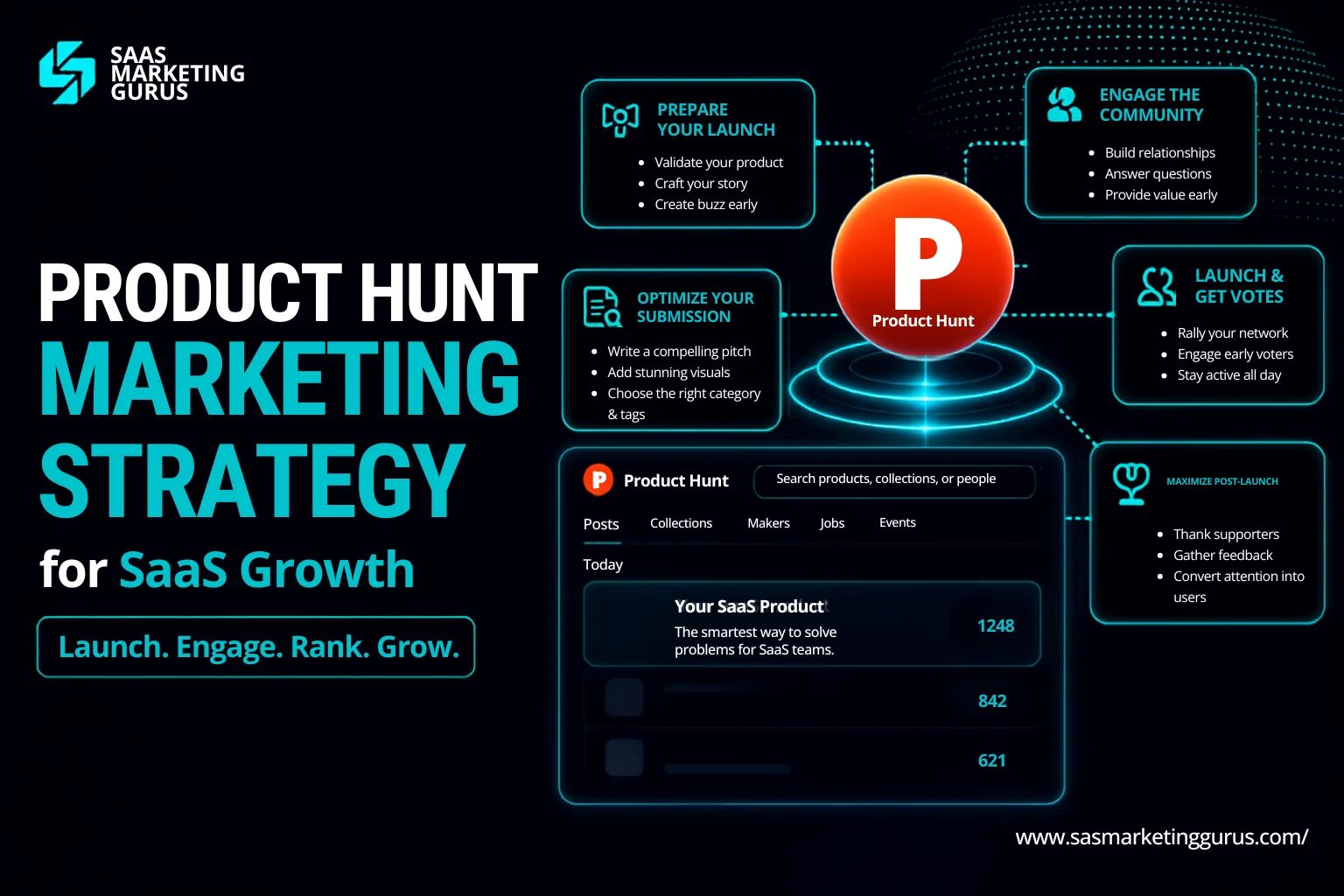
Learn what Product Hunt is and how to launch your SaaS for more signups, backlinks, visibility, and long-term growth.
What is Product Hunt? Product Hunt is a product discovery platform where SaaS companies, startups, and independent makers launch new software, apps, and digital products to early adopters, investors, founders, and the tech community. If you’re wondering what Product Hunt is, think of it as a launch platform that helps new products gain visibility, collect user feedback, build credibility, and attract qualified signups.
For SaaS businesses, a successful Product Hunt launch can generate thousands of visitors within 24 hours, valuable backlinks, customer insights, and early social proof that supports future marketing efforts. While Product Hunt is often associated with startups, it has become an important acquisition channel for SaaS companies looking to validate products before scaling through SEO, paid advertising, or outbound marketing.
This guide explains how Product Hunt works, how its ranking algorithm influences visibility, how to prepare for a successful Product Hunt launch, common mistakes to avoid, real SaaS launch examples, and practical strategies to turn launch-day traffic into long-term customers.
Key Takeaways
- Product Hunt is a free platform where SaaS founders launch to early adopters, collect feedback, and earn backlinks.
- Products compete inside a 24-hour ranking cycle that resets at 12:01 AM Pacific Time. Early upvote velocity has the biggest impact on where you land.
- A strong launch needs 4 to 8 weeks of prep: beta users, visuals, and a tight product description before you submit.
- Most SaaS launches see 4,000 to 10,000 visitors and 100 to 1,000+ signups, with 1 to 5% converting to paid.
- Product Hunt is a starting point, not a growth channel on its own. Pair it with SEO, Reddit, and GEO to keep the traffic coming after launch day.
What Is Product Hunt and Why Does It Matter for SaaS Companies?
Product Hunt offers much more than a one-day launch opportunity. For SaaS founders, it serves as an early validation platform where real users can discover your product, test its features, and provide feedback before you invest heavily in long-term customer acquisition.
Key benefits include:
- Reach Early Adopters: Connect with users who actively explore new SaaS products and are willing to test, review, and recommend promising tools.
- Build Trust and Credibility: Product badges, user reviews, comments, and engagement demonstrate social proof that can improve conversion rates.
- Earn High-Authority Backlinks: Your Product Hunt listing can generate referral traffic and valuable backlinks that support your broader SEO strategy.
- Gain Actionable Product Feedback: Comments from founders, marketers, developers, and early users help refine onboarding, messaging, and product features.
- Generate Secondary Exposure: Popular launches are frequently shared across newsletters, startup communities, blogs, LinkedIn, and X (formerly Twitter), extending visibility beyond launch day.
Many SaaS founders use Product Hunt as an early milestone to validate product-market fit, refine positioning, and build momentum before expanding into channels like SEO, Reddit marketing, paid advertising, and content marketing.
How Product Hunt Works for SaaS Launches
Daily Launch Cycle
- Launch Reset: Product Hunt resets its daily ranking cycle at 12:01 AM Pacific Time, and every product submitted before that time competes for the full 24-hour cycle. Scheduling later in the day costs you hours of ranking time and early engagement.
- Best Day to Launch: Tuesday and Wednesday carry the most engaged Product Hunt traffic, and also the most competition. Weekends run quiet, Monday is catch-up traffic, and Friday tails off early. Weigh how much competition you can realistically outpace against the traffic volume before picking a day.
- Competition Window: Every product launched that day is compared head-to-head over the same 24-hour voting period. First-hour momentum sets the trajectory: vote velocity early in the cycle carries more ranking weight than the same votes arriving late, because it signals genuine early interest rather than a coordinated push.
- 24-Hour Visibility: Launching at the 12:01 AM PT reset gives a product the full window to build momentum before competitors catch up. A strong showing in the first four hours usually determines whether a launch is still visible once the leaderboard fills up later in the day.
Upvote velocity still matters, but Product Hunt’s algorithm now weighs the quality of that engagement, real comments, maker replies, account history, more heavily than raw vote count alone. A launch with a smaller but genuinely engaged audience regularly outranks one built on a bigger, colder push.
Every Product Hunt launch follows a fixed 24-hour ranking window. Understanding this schedule helps SaaS founders maximize visibility during the hours that matter most.
How Does the Product Hunt Ranking Algorithm Work?
Although Product Hunt doesn’t publicly disclose its full ranking algorithm, its behavior has shifted noticeably since 2023: raw upvote count carries less weight than it used to, and engagement quality, comments, replies, account history, carries more.
The factors below consistently show up in how products perform on launch day.
| Ranking Factor | Why It Matters |
|---|---|
| Vote Quality and Velocity | Steady, early votes from real, established accounts count more than a late burst or votes from brand-new accounts. Product Hunt actively filters suspicious voting patterns, so a sudden spike reads as a red flag, not momentum. |
| Quality Comments | Meaningful discussions and founder replies signal genuine community engagement, and now weigh more heavily than vote count alone. |
| Account Reputation | Votes and comments from active, trusted Product Hunt members carry more influence than newly created accounts. |
| Editorial Featuring | Products selected by the Product Hunt editorial team receive additional homepage exposure and visibility. |
| Relevant Categories and Tags | Choosing accurate categories helps your SaaS reach users interested in your product type. |
Rather than chasing as many upvotes as possible, focus on creating authentic conversations with early users. Responding quickly to questions, encouraging feedback, and actively participating throughout launch day produces stronger results than relying on vote campaigns, and coordinated voting is one of the fastest ways to get a launch penalized rather than ranked.
Who Are the Makers, Hunters, and Users on Product Hunt?
To run a successful SaaS launch on Product Hunt, it’s important to understand the different roles and how each influences your launch:
- Makers: These are the product creators. They submit the product, manage launch details, and engage with the community. For SaaS founders, this is your primary role, you’ll guide messaging, visuals, and responses to feedback.
- Hunters: These are experienced Product Hunt users who can submit products on behalf of makers. Product Hunt has reduced the structural advantage hunters used to carry, so self-hunting works fine once you’ve been active on the platform for a few weeks. A hunter is worth using mainly for a first launch, or when you have little presence on Product Hunt yourself and the hunter is genuinely active in your product’s niche.
- Community Users: Everyday users who vote, comment, and share feedback. Their engagement signals product quality to both the algorithm and other users, influencing your ranking.
“The key to a successful Product Hunt launch is not just votes, it’s engagement quality and timing. Early momentum from a small, targeted group often drives more visibility than mass voting.” — Ryan Hoover, Founder of Product Hunt
Actionable Tip for SaaS Launches:
- Coordinate with your hunter or early advocates before launch to ensure your product gets votes and comments in the first few hours.
- Encourage quality feedback rather than just upvotes; meaningful engagement helps your product appear in the top daily rankings and may attract media coverage.
Step-by-Step Product Hunt Launch Guide for SaaS
Launching a SaaS product on Product Hunt requires careful planning. Here’s a proven step-by-step approach that maximizes visibility, early engagement, and conversions.
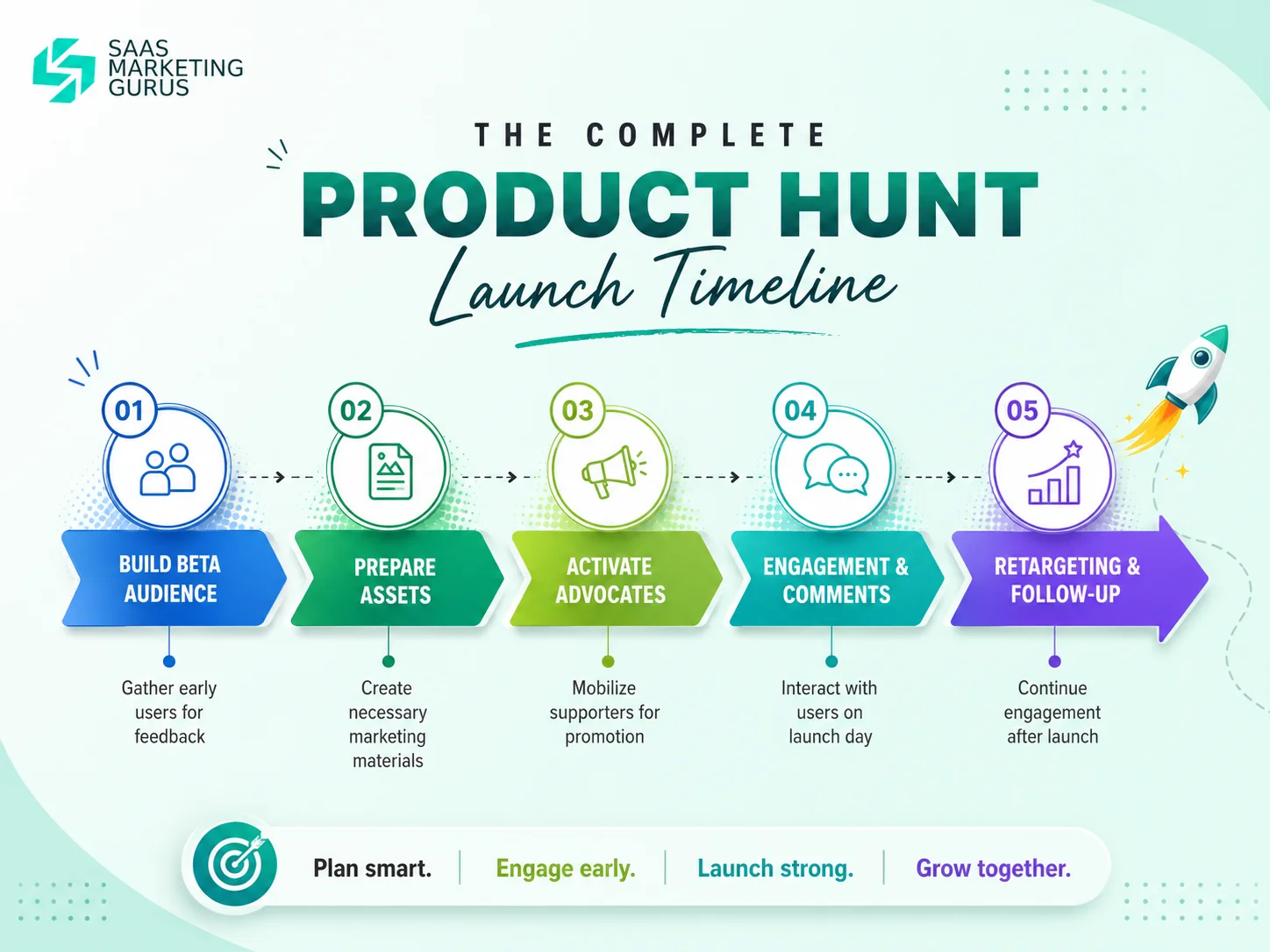
Pre-Launch (4–8 Weeks Before Launch)
A successful Product Hunt marketing strategy starts weeks before launch by building awareness through email newsletters, social media, founder communities, and beta user outreach.
- Build a Beta User Email List
- Start collecting early adopters who match your SaaS target audience.
- These users will provide feedback and create initial momentum on launch day.
- Prepare High-Quality Visuals and Media Assets
- Screenshots, demo videos, GIFs, or short walkthroughs make your product stand out on the Product Hunt page.
- Include clear feature highlights and value propositions tailored for your SaaS audience.
- Engage Early Advocates on Social Platforms
- Reach out to followers and communities on Twitter, LinkedIn, and Slack.
- Encourage them to participate in the first hours of the launch by commenting or upvoting. Early engagement is crucial for algorithmic visibility.
- Plan a Launch Day Engagement Schedule
- Assign team members to monitor comments, respond promptly, and share updates.
- Set specific time blocks for checking metrics, tracking votes, and coordinating social activity.
Actionable Tip for SaaS Founders:
Treat pre-launch as a mini marketing campaign. Every email, social mention, and advocate engagement contributes to first-hour momentum, which is one of the most critical ranking factors on Product Hunt.
Launch Day Best Practices
The first 24 hours determine most of your Product Hunt visibility, making every interaction count. Successful launches are usually the result of preparation rather than luck.
- Respond Quickly to Every Comment
Aim to reply within minutes whenever possible. Fast responses encourage longer discussions, answer buyer questions, and demonstrate that your team is actively engaged. - Sare Your Launch Strategically
Promote your Product Hunt page through your email list, LinkedIn, X, founder communities, Slack groups, and existing customers. Focus on people who genuinely care about your product rather than asking for mass upvotes. - Encourage Meaningful Conversations
Ask users about their workflows, challenges, and feature requests. Thoughtful discussions often generate more visibility than simply accumulating votes. - Monitor Performance Throughout the Day
Track traffic, signups, referral sources, and user behavior so your team can identify which promotional channels drive the highest-quality visitors.
We saw this play out directly with WorkHub’s Product Hunt launch: founders who replied within the first hour generated more discussion and stronger signup numbers than launches with delayed engagement. Full breakdown in the case study.
Post-Launch Growth Strategy
A Product Hunt launch should be viewed as the beginning of your customer acquisition journey rather than the finish line. The visitors you earn during launch day are far more valuable when they’re nurtured into long-term users.
Start by segmenting visitors based on their behavior. Users who created an account should receive onboarding emails, while visitors who didn’t convert can be retargeted with relevant content, product updates, or limited-time offers.
Next, analyze your performance using tools like Google Analytics 4, Mixpanel, or HubSpot. Review where your traffic came from, which channels generated the highest conversion rates, and where users dropped off during onboarding.
Finally, turn community feedback into product improvements. Product Hunt comments often reveal usability issues, feature requests, and messaging gaps that can improve future launches and increase customer retention.
The most successful SaaS teams continue promoting their launch after Product Hunt by publishing case studies, sharing launch lessons on LinkedIn, creating blog content, and repurposing customer feedback across multiple marketing channels.
Real-World SaaS Launch Examples
To understand how Product Hunt strategies translate into tangible results, here are some real-world SaaS launch examples. These illustrate the impact of pre-launch preparation, launch-day engagement, and post-launch growth strategies on traffic, signups, and conversions.
These examples illustrate how preparation and engagement affect launch performance.
| SaaS Tool | Visitors | Signups | Paid Conversions | Key Takeaway |
|---|---|---|---|---|
| Productivity App | 5,600 | 560 | 37 | Pre-launch advocacy + visuals drive initial traction |
| Analytics SaaS | 3,200 | 210 | 0 | Product Hunt drives visibility; audience fit is critical |
| AI Productivity Tool | 7,400 | 820 | 41 | Tech-focused SaaS gains traction faster with early engagement |
What Are the Most Common Product Hunt Mistakes?
Launching on Product Hunt can boost SaaS growth, but small mistakes can hurt visibility, engagement, and signups. Knowing these pitfalls and how to avoid them is key to a successful launch.
The following mistakes are among the most common reasons SaaS launches underperform.
| Mistake | Impact | How to Avoid |
|---|---|---|
| Launching without prep | Low engagement | Build an advocate base weeks ahead |
| Ignoring comments | Missed ranking opportunities | Respond promptly and thoughtfully |
| Targeting the wrong audience | Low conversions | Align the PH audience with the SaaS buyer persona |
| Chasing upvotes only | Shallow engagement | Focus on comments and feedback quality |
How Do You Measure Product Hunt Success?
Understanding the impact of your Product Hunt launch is essential to turning traffic into signups and paying users. Here’s what to track and expect:
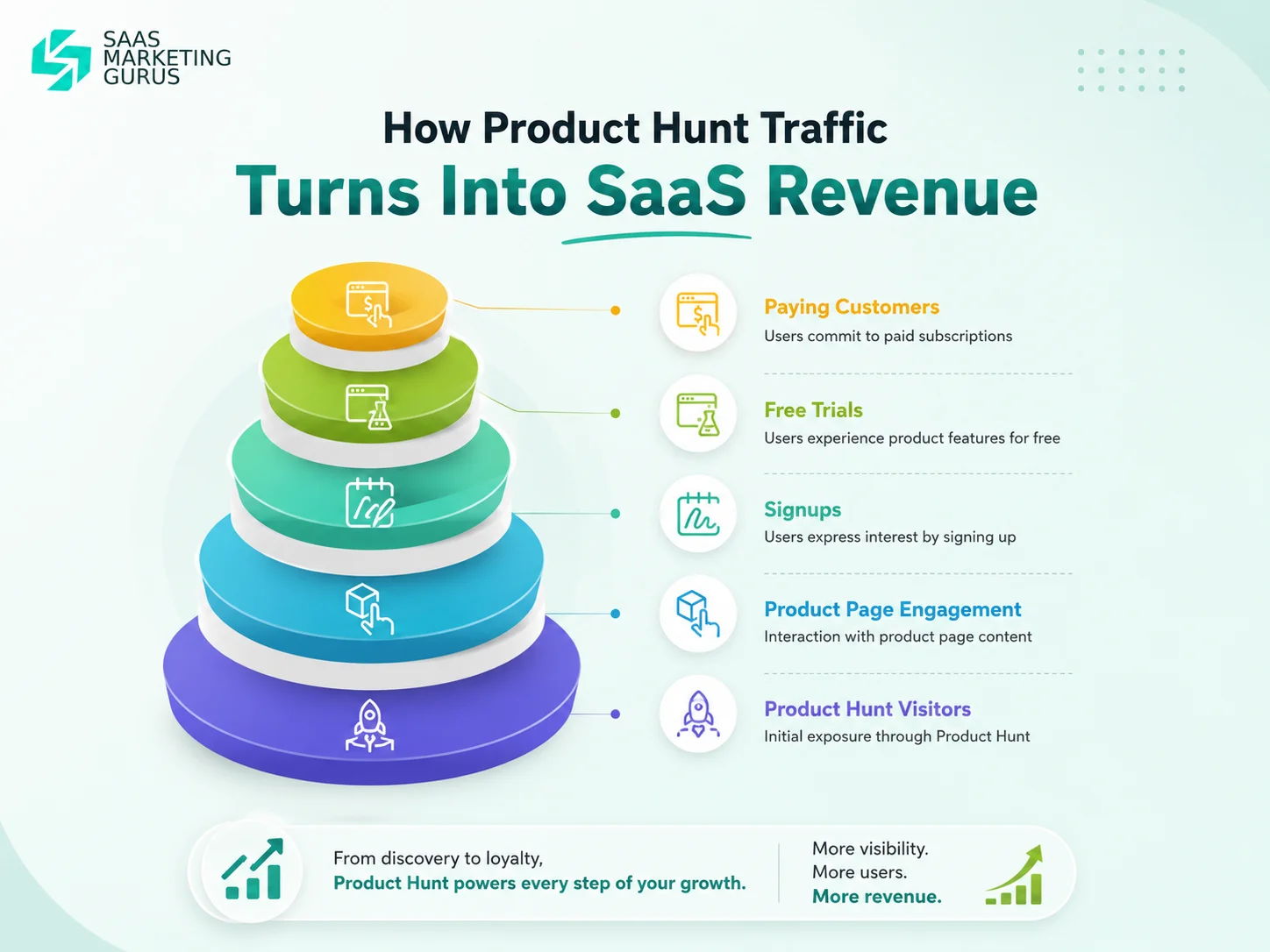
- Traffic: Typically 4,000–10,000 daily visitors for most SaaS launches.
- Signups: Around 100–1,000+, depending on your SaaS category and pre-launch preparation.
- Paid Conversions: Usually 1–5% of visitors, highlighting the importance of post-launch follow-up campaigns.
Long-Term Benefits:
- High-Authority Backlinks: Product Hunt pages provide persistent backlinks that boost your domain authority and SEO.
- Brand Credibility: “Featured on Product Hunt” badges and engagement signals strengthen your product’s reputation.
- Secondary Traffic: Tech blogs, newsletters, and social sharing can drive ongoing awareness long after the initial launch.
Product Hunt vs Other Launch Channels
When planning a SaaS launch, choosing the right channels can make or break your results. Here’s how Product Hunt compares with other platforms in terms of audience, outcomes, and SaaS-specific use cases:
| Channel | Best For | Typical Outcome | SaaS Use Case |
|---|---|---|---|
| Product Hunt | Early adopters and tech enthusiasts | Awareness, high-quality backlinks, and community engagement | Validate niche SaaS ideas, gather early feedback, and build credibility with early adopters |
| Hacker News | Developer-focused audience | Technical feedback, engagement | Launch developer tools, APIs, and software products |
| Community-driven discussion | Engagement and niche traffic | Beta testing, gathering user opinions, and exploring niche SaaS markets | |
| SEO | Long-term, sustainable growth | Organic traffic and inbound leads | Drive consistent traffic to SaaS landing pages, blogs, and educational content |
| Email List | Existing audience | High conversion rates | Invite beta users, promote product updates, and upsell SaaS features |
| Paid Ads | Immediate reach and visibility | Paid leads and signups | Acquire early users quickly through targeted campaigns |
Why Product Hunt Stands Out:
Product Hunt is more than just a listing site; it’s a launch platform that combines early adopters, social proof, and community validation. For SaaS founders, it’s ideal for testing new ideas, generating buzz, and building credibility before scaling other channels.
Pro Tip for SaaS Launches:
Focus on Product Hunt first for awareness and validation, then use SEO, email, and paid ads to convert that early interest into paying users.
Alternatives to Product Hunt
While Product Hunt is one of the most popular product launch platforms, it is not the only option for SaaS companies. Many founders use additional platforms to reach different audiences and extend visibility beyond Product Hunt’s 24-hour launch window.
Some popular alternatives include:
| Platform | Best For |
|---|---|
| BetaList | Early-stage startups looking for beta users |
| Hacker News | Developer tools and technical SaaS |
| Community discussions and niche audiences | |
| Peerlist | Builders, designers, and startup professionals |
| Indie Hackers | Founder networking and product feedback |
Product Hunt is best for launch-day visibility, while Reddit builds ongoing community engagement and SEO drives sustainable long-term traffic.
Ready to Launch Your SaaS on Product Hunt?
Understanding what Product Hunt is is only the first step. The real opportunity comes from planning a strategic launch, engaging with the community, and following up with every visitor after launch day.
For SaaS companies, Product Hunt can generate qualified traffic, valuable customer feedback, strong social proof, and high-quality backlinks that support long-term growth. However, lasting success depends on combining your Product Hunt launch with SEO, content marketing, community engagement, and conversion optimization.
If you’re planning a Product Hunt launch and want to maximize signups, conversions, and long-term growth, explore our Product Hunt marketing services and SaaS case studies to see how we’ve helped startups turn launch-day momentum into sustainable customer acquisition.
FAQs
How many upvotes are typically needed to become Product of the Day?
There’s no fixed number. Product Hunt weighs vote quality, comment engagement, and timing more heavily than raw count since its last major algorithm shift, so a smaller, genuinely engaged launch can outrank a bigger one built on cold traffic. What matters more than any vote target: early momentum from real accounts in the first few hours, and sustained comment activity through the full 24-hour window.
Does Product Hunt drive paying SaaS customers?
Product Hunt primarily generates awareness and beta signups. Paid conversions usually require follow-up campaigns, onboarding sequences, or retargeting to turn early interest into revenue.
Should I hire a Product Hunt “hunter” for my launch?
Hiring a hunter is optional. While experienced hunters can help amplify reach, organic early engagement from your beta users and advocates often produces better results for SaaS launches.
Can a Product Hunt launch improve SEO for my SaaS?
Yes. Every Product Hunt page provides high-authority backlinks that enhance domain authority and search visibility. This can improve organic traffic to your landing pages or blog content over time.
How much does it cost to launch on Product Hunt?
Launching a product on Product Hunt is free. There is no fee to submit your product. Some SaaS companies choose to invest in landing pages, product videos, email campaigns, or paid promotion to maximize launch performance, but these costs are optional.