Fintech marketing is the process of attracting, educating, converting, and retaining customers for a financial technology product. It combines clear positioning, credible evidence, useful content, search visibility, and a product experience that earns trust.
The challenge is simple: people do not treat financial products like ordinary software. They want to understand fees, security, privacy, eligibility, risk, and support before sharing information or moving money.
Google also applies stronger quality expectations to content that can affect financial stability. That makes experience, expertise, authority, and trust especially important for fintech brands.
Key Takeaways
- Trust should be built into every page, claim, form, and customer interaction.
- SEO captures demand, while AEO and GEO make content easier for search engines and AI systems to understand, retrieve, and cite.
- Fintech content needs named experts, clear sources, practical examples, and visible review dates.
- Growth should be measured through qualified conversions, activation, retention, and revenue, not traffic alone.
- Compliance should guide content planning from the beginning.
Why Is Fintech Marketing Different?
Fintech customers often compare more than product features. They may review pricing, regulatory information, security controls, customer feedback, and support options before taking action.
Marketing teams also need stronger evidence for claims. The United States Federal Trade Commission says advertising claims must be truthful, evidence-based, and free from deceptive or unfair messaging. The Financial Conduct Authority requires relevant financial promotions in the United Kingdom to be fair, clear, and not misleading.
| Fintech concern | What marketing should provide |
|---|---|
| Fees and rates | Complete costs, conditions, and limits |
| Security | Specific controls and honest wording |
| Privacy | Clear data collection and usage details |
| Eligibility | Who qualifies and what is required |
| Product risk | Balanced benefits and limitations |
| Support | Visible contact and complaint options |
A polished campaign cannot fix hidden fees, confusing onboarding, or unsupported claims. Marketing, product, customer support, and compliance need to communicate the same promise.
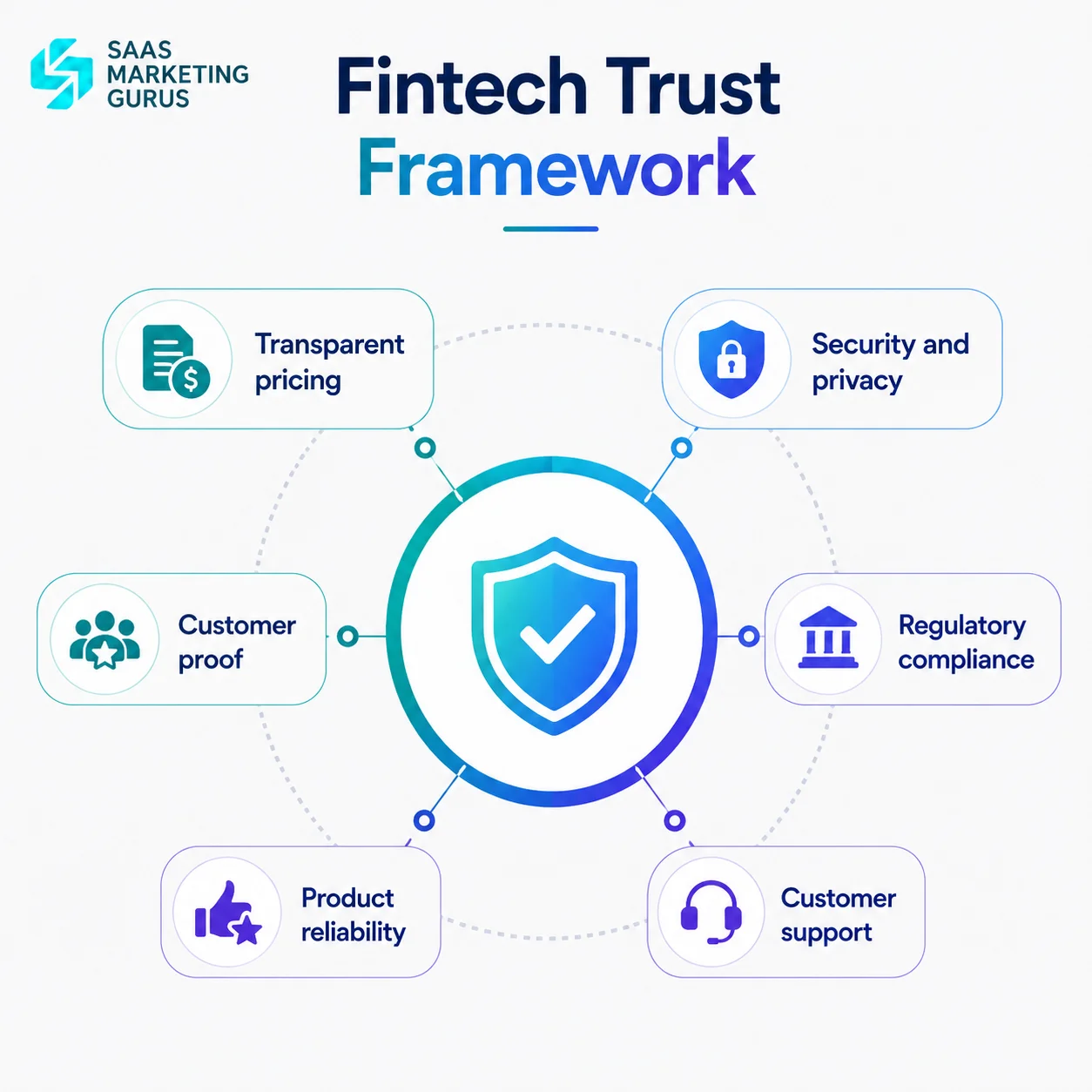
Why Trust and Transparency Matter in Fintech Marketing
Fintech customers increasingly research products before sharing personal information or making financial decisions. According to Deloitte’s fintech research, digital financial services continue to expand as consumers increasingly adopt digital banking, payments, and financial management solutions. This growth increases competition and makes trust focused marketing more important for fintech brands..
As more companies enter the market, customers compare security practices, pricing transparency, customer reviews, and product reliability before choosing a provider. This makes trust focused marketing a key factor in fintech growth.
How Should a Fintech Marketing Strategy Be Built?
Start with the customer decision, not the channel.
1. Define the Audience and Problem
Identify who the product serves, what financial problem it solves, and what stops the customer from trusting the solution.
2. Map Search and Decision Intent
Separate informational, comparison, and purchase queries. Someone searching “how business payment reconciliation works” needs education. Someone searching “best payment reconciliation software” needs comparison details, proof, and a clear next step.
Use SaaS keyword research to build this intent map.
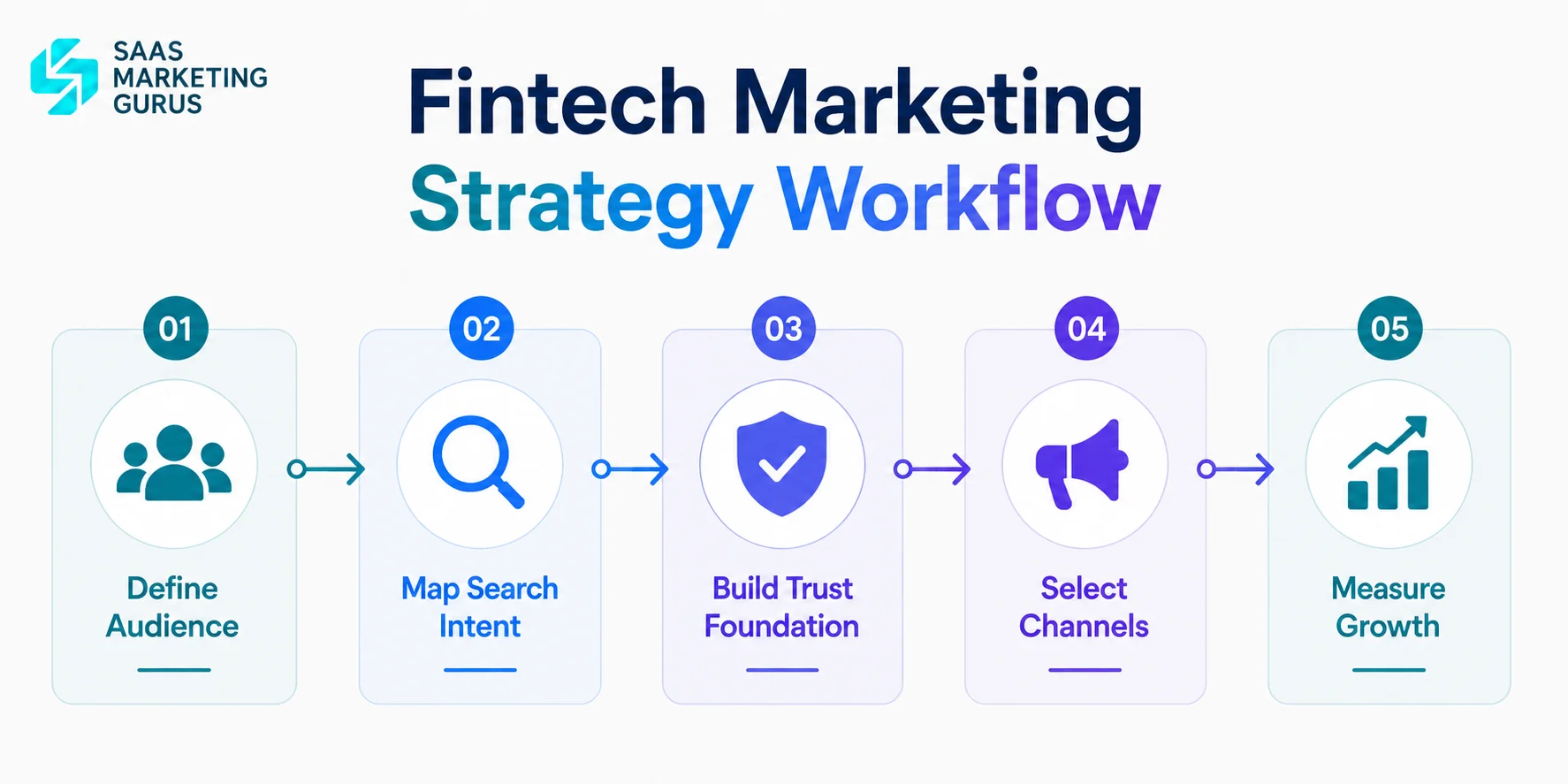
3. Build the Trust Foundation
Before increasing traffic, review pricing pages, security information, privacy wording, customer proof, regulatory details, product limitations, and support access.
4. Select Focused Growth Channels
| Channel | Primary role | Main success metric |
|---|---|---|
| SEO | Capture existing demand | Qualified conversions |
| Paid search | Test commercial intent | Customer acquisition cost |
| Improve activation | Activation and retention | |
| Partnerships | Gain reach and credibility | Referred customers |
| Communities | Learn and build trust | Assisted conversions |
Do not invest equally in every channel. Start with the channels that match customer intent, then increase spending when they produce suitable customers.
The SaaS marketing strategies guide and SaaS marketing budget guide provide useful planning support.
What Does a Fintech Marketing Funnel Look Like?
A fintech marketing funnel guides customers from discovering a financial problem to becoming active and loyal users. Since financial decisions involve higher trust and risk, each stage should provide the right information, proof, and support.
| Funnel Stage | Customer Need | Marketing Asset |
|---|---|---|
| Awareness | Understand the problem | Educational guides, industry reports, financial explainers |
| Consideration | Compare available solutions | Comparison pages, pricing guides, product reviews |
| Decision | Reduce risk before purchase | Customer stories, demos, security pages, case studies |
| Activation | Start using the product successfully | Tutorials, onboarding guides, product documentation |
| Retention | Continue receiving value | Support content, product updates, educational resources |
A successful fintech funnel does not only focus on acquisition. It helps customers feel confident at every step by answering questions about security, costs, usability, and long term value.
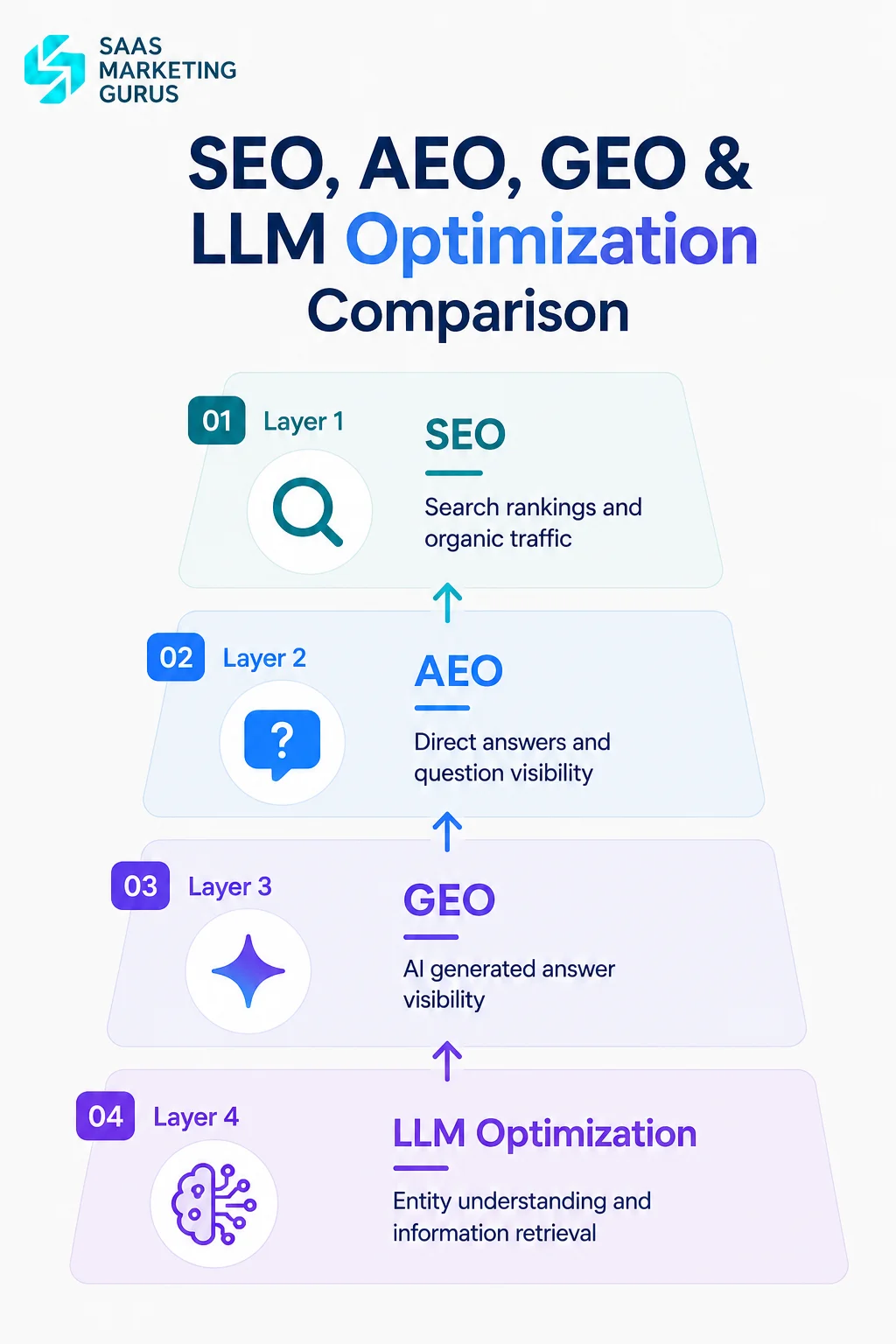
How Do SEO, AEO, GEO and LLM Optimization Work Together?
These areas overlap, but each has a different purpose.
| Area | Main focus |
|---|---|
| SEO | Ranking and earning qualified search visits |
| AEO | Providing direct answers to questions |
| GEO | Improving visibility in generated answers |
| LLM optimization | Making entities and facts easy to retrieve |
Google states that established SEO practices remain relevant for AI Overviews and AI Mode. It also advises publishers to create original, useful content instead of producing separate pages for every possible query variation.
A strong fintech page should include:
- A direct definition near the beginning
- Question-based headings that match real user needs
- Short answers followed by deeper explanation
- Clear relationships between the company, product, audience, and problem
- Named authors, reviewers, sources, and update dates
- Original examples, methods, or first hand insights
- Tables and lists that make comparisons easy to retrieve
- Consistent terminology across related pages
- Relevant internal links that establish a topic cluster
Read how generative search engines rank content and the AI search optimization guide for a deeper explanation.
How Can Fintech Brands Improve AI Search Visibility?
Fintech brands can improve visibility across AI search systems by making their information easier to understand, verify, and retrieve.
Key practices include:
- Create clear answers to common financial questions.
- Maintain consistent company, product, and service information across trusted platforms.
- Publish original research, insights, and industry perspectives.
- Use expert reviewed content with clear authorship.
- Build authoritative references through trusted publications and industry sources.
AI systems are more likely to reference content that provides accurate information, clear context, and strong evidence.
Want to understand how your brand appears across AI search platforms? Explore SMG’s AI search optimization services to identify visibility gaps and opportunities.
What Does Strong E E A T Look Like in Fintech?
E E A T should be visible on the page. It should not depend only on a company claiming to be trustworthy.
| Signal | Evidence to include |
|---|---|
| Experience | Real lessons, examples, and tested methods |
| Expertise | Qualified author and specialist review |
| Authority | Citations, mentions, and topic coverage |
| Trust | Accurate claims, disclosures, and policies |
Every important financial claim should answer three questions:
- Who is making the claim?
- What evidence supports it?
- Under what conditions is it true?
Avoid anonymous statistics, vague phrases such as “bank level security,” and case studies without context. Security-related claims should align with recognized practices such as the Cybersecurity Framework for managing security risks.
The TRUST Framework for Fintech Marketing
Fintech brands need more than visibility. They need credibility. The TRUST framework helps companies create marketing that builds confidence throughout the customer journey.
T: Transparency
Explain pricing, fees, limitations, eligibility requirements, and conditions clearly. Avoid unclear claims that may create confusion.
R: Reliability
Support important claims with evidence, customer examples, expert reviews, and trusted sources.
U: User Education
Help customers understand financial decisions through clear guides, explanations, and practical examples.
S: Security Signals
Show relevant security practices, privacy policies, compliance information, and risk management processes.
T: Track Results
Measure marketing success through qualified conversions, activation, retention, and customer value instead of traffic alone.
What Content Should Fintech Brands Publish?
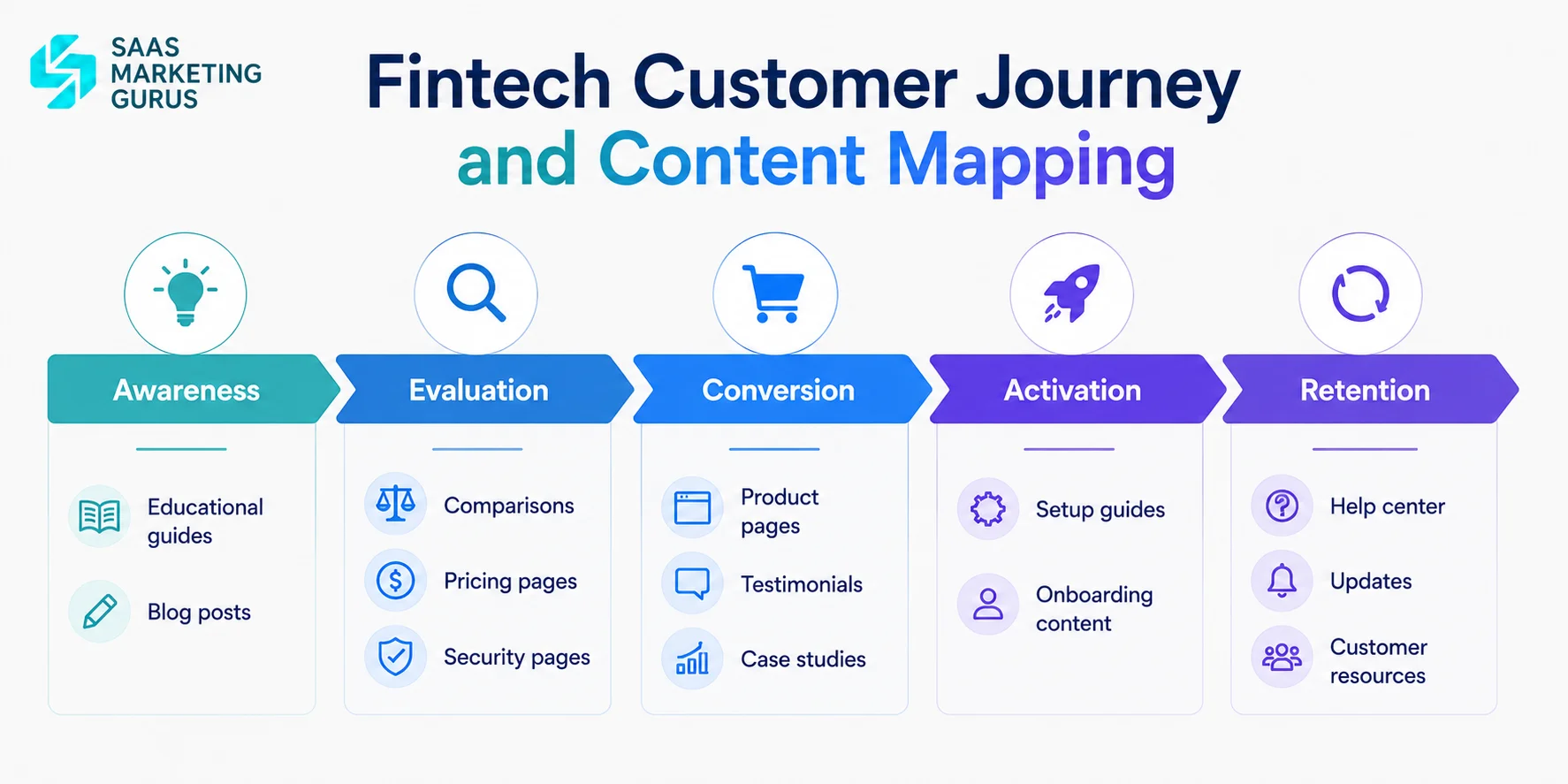
Content should support the whole customer journey.
| Decision stage | Useful content |
|---|---|
| Awareness | Educational guides and problem explanations |
| Evaluation | Comparisons, pricing, and security pages |
| Conversion | Product pages, proof, and clear next steps |
| Activation | Setup guides and onboarding resources |
| Retention | Help content, updates, and use cases |
Useful content answers questions customers may hesitate to ask. What does the product cost? What data is collected? What happens when a transaction fails? Who is the product unsuitable for? How can an account be closed?
For community-driven research and visibility, review Reddit organic marketing for SaaS. Community participation should be transparent, useful, and focused on real customer problems.
Which Fintech Marketing Content Drives Trust and Growth?
Fintech customers often need more education before making decisions. The best content helps users understand complex financial topics while building trust in the brand.
Examples include:
- Payment companies publishing guides about transaction security, payment failures, and fraud prevention.
- Banking platforms creating financial education resources around saving, investing, and money management.
- Expense management platforms explaining business finance workflows, reporting, and cost control.
- Lending companies creating eligibility guides that explain requirements, repayment options, and responsible borrowing.
This type of content supports both customer education and search visibility because it answers real questions users have before choosing a financial product.
Which Metrics Matter Most?
Measure whether marketing attracts the right customers and helps them succeed.
Track qualified organic traffic, customer acquisition cost, landing page conversion, application completion, activation, retention, complaint themes, branded searches, AI citations, assisted conversions, and revenue by channel.
A page that earns traffic but creates confusion is not performing well. A campaign that drives signups but attracts unsuitable customers may increase support costs and reduce retention.
Fintech Marketing Checklist
Before publishing, confirm that:
- The page answers the main question immediately.
- Claims are accurate and supported by evidence.
- Fees, risks, limits, and eligibility are clear.
- The author and reviewer are identified.
- Sources and review dates are visible.
- Headings match real search and conversational questions.
- Internal links connect related topics.
- The next action matches the reader’s intent.
- The page works clearly on mobile devices.
- Compliance has reviewed relevant claims and disclosures.
Frequently Asked Questions
What is fintech marketing?
Fintech marketing is the process of promoting financial technology products by attracting, educating, converting, and retaining customers. It combines content marketing, SEO, paid channels, trust building, compliance, and customer education to help users make confident financial decisions.
Why is SEO important for fintech companies?
SEO helps fintech companies reach users who are actively searching for financial solutions, product comparisons, and answers to important questions. Effective fintech SEO improves visibility, builds credibility, and attracts customers with stronger purchase intent.
How can fintech companies build trust online?
Fintech companies can build trust by providing transparent pricing, clear security information, expert reviewed content, customer proof, accurate claims, and easy access to policies and support. Customers are more likely to engage when they understand the risks, benefits, and limitations.
What are the best marketing channels for fintech companies?
The best fintech marketing channels depend on the product, audience, and customer journey. Common channels include SEO, content marketing, paid search, email marketing, partnerships, communities, and referral programs. Companies should focus on channels that generate qualified customers instead of only increasing traffic.
How does AI search impact fintech marketing?
AI search changes how fintech brands gain visibility by prioritizing clear, trustworthy, and well structured information. Brands can improve AI visibility by creating direct answers, publishing original insights, maintaining consistent information across platforms, and building strong authority signals.
What type of content works best for fintech marketing?
The most effective fintech content helps customers understand financial decisions. Examples include security guides, product comparisons, pricing explainers, financial education resources, onboarding tutorials, eligibility guides, and industry research.
How should fintech companies measure marketing success?
Fintech companies should measure marketing performance through qualified leads, customer acquisition cost, conversion rates, activation, retention, customer lifetime value, revenue contribution, and customer quality. Traffic alone does not show whether marketing is creating sustainable growth.
What is the difference between fintech marketing and traditional SaaS marketing?
Fintech marketing requires stronger trust signals because financial products involve security, compliance, and risk considerations. While SaaS marketing often focuses on productivity and features, fintech marketing must also prove reliability and safety.
Visibility Is Easy, Belief Is Earned
A fintech company can buy attention. It cannot buy trust.
Search rankings, AI citations, and paid reach only create an opportunity to be considered. Growth happens when the content answers hard questions, the evidence supports the claims, and the product delivers what the marketing promised.
The real question is not, “How do we get more people to see us?”
It is, “What will they find when they look closely?”
SMG helps fintech and SaaS teams connect SEO, AEO, GEO, content, and E E A T into one practical growth system. Explore our SaaS SEO services or review our AI search optimization guide to identify the visibility and trust gaps holding your growth back.