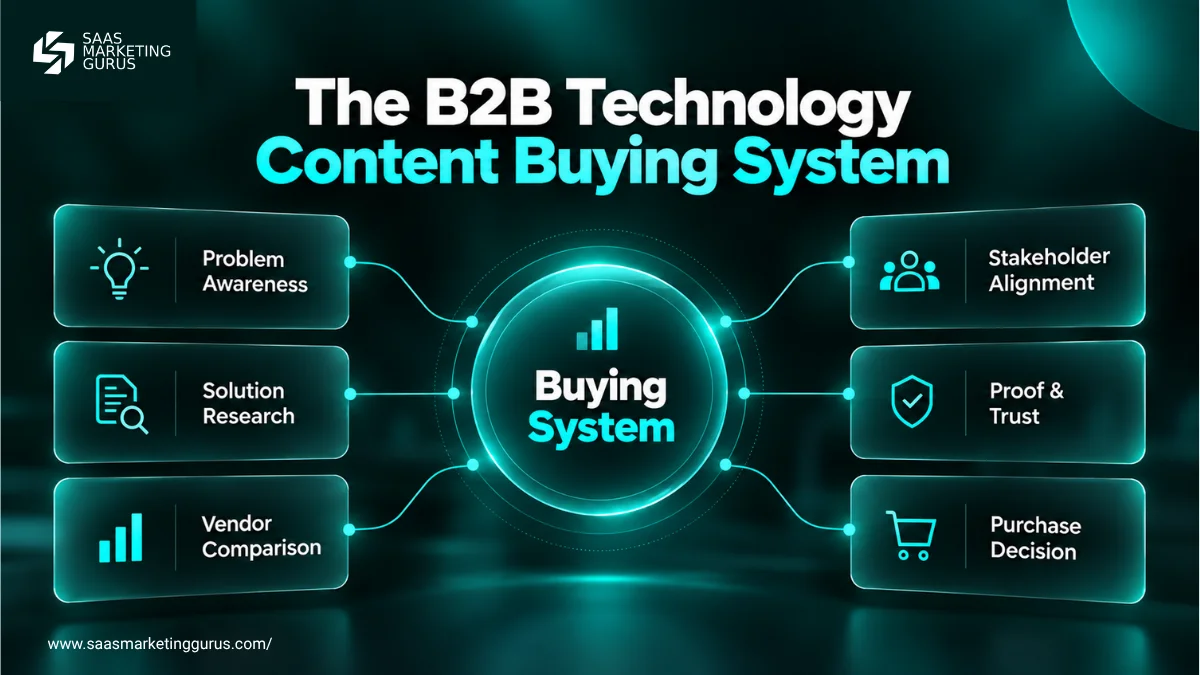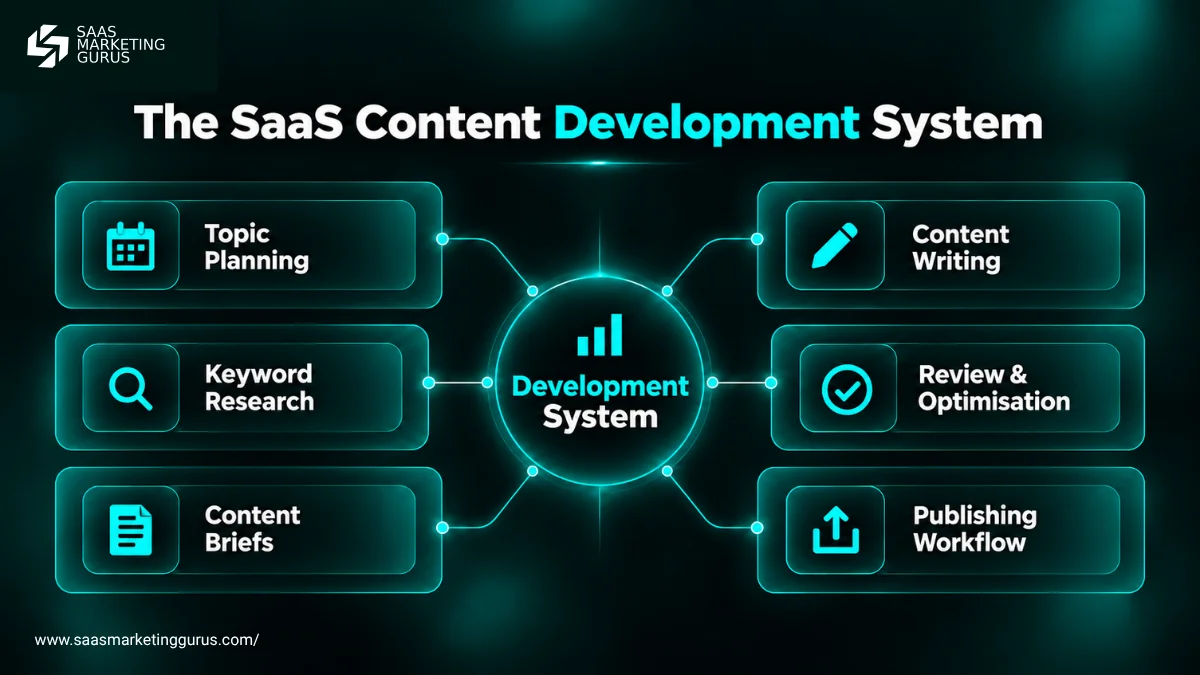
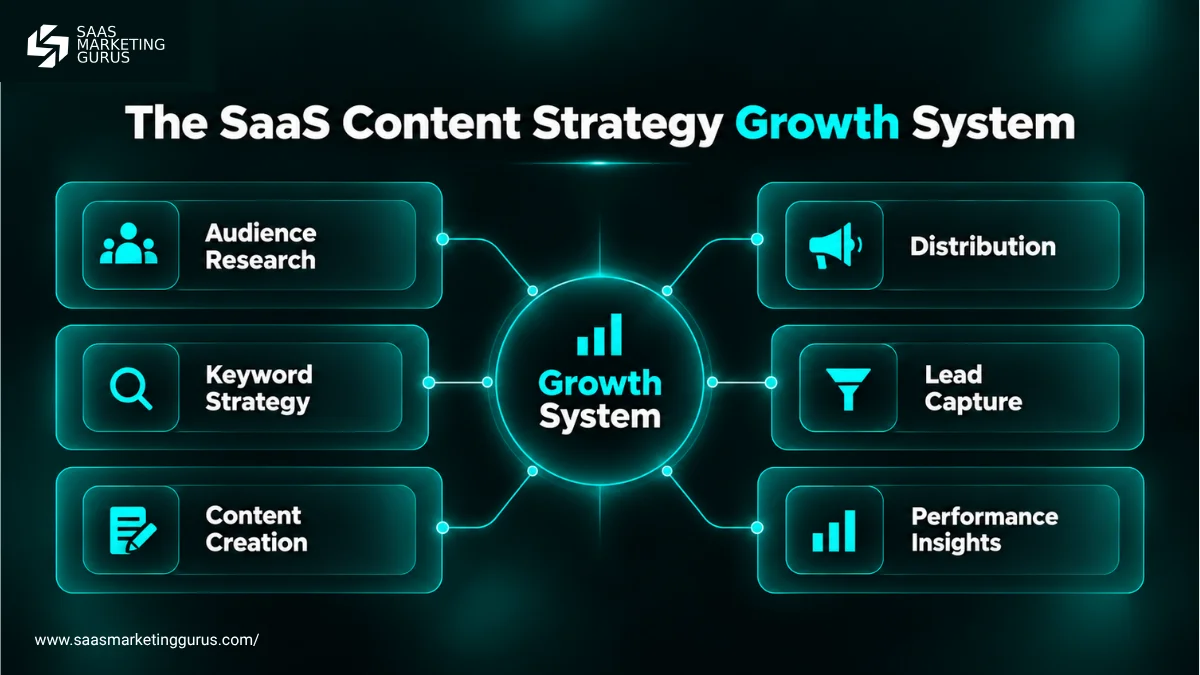
The right content strategy agency for a SaaS company is the one that can show how its plan turns buyer questions into demos, not the one with the biggest publishing calendar. Choose a partner that researches your ICP and sales objections first, decides what not to publish, covers search, communities and AI answers, and reports on qualified pipeline.
If your blog gets traffic but sales still asks where the qualified opportunities are, the gap is rarely a shortage of topics. It is the system behind them. This guide from SaaS Marketing Gurus (SMG), a B2B SaaS marketing agency, specializing in Reddit marketing, Quora marketing, Generative Engine Optimization (GEO), SaaS SEO, and Product Hunt launches, gives you a scorecard, interview questions and proposal red flags to use before you sign.
Key Takeaways
- Judge agencies on buyer research, intent mapping, product depth, distribution and pipeline reporting.
- Ask what the agency would stop publishing. Pruning, merging and redirects are strategy.
- Demand proof tied to demos or pipeline, with the starting problem and timeframe stated.
- Treat SEO, GEO, Reddit and Quora research, and conversion paths as one system.
- Expect research and decisions in the first 30 days, not just a batch of articles.
What Does a SaaS Content Strategy Agency Actually Do?
A SaaS content strategy agency decides which content your company should create, update, merge or remove so buyers can find, evaluate and choose your product. Production is part of the job, but the core output is a set of decisions tied to revenue.
Strong agencies start with your ideal customer profile (ICP) and buying process, not a keyword export. They need to know who buys, who influences the deal, which objections delay it, which problems trigger research, and which product capabilities matter during evaluation.
A complete engagement usually covers these deliverables:
- Buyer and sales research: interviews, call notes and lost-deal reasons turned into topics.
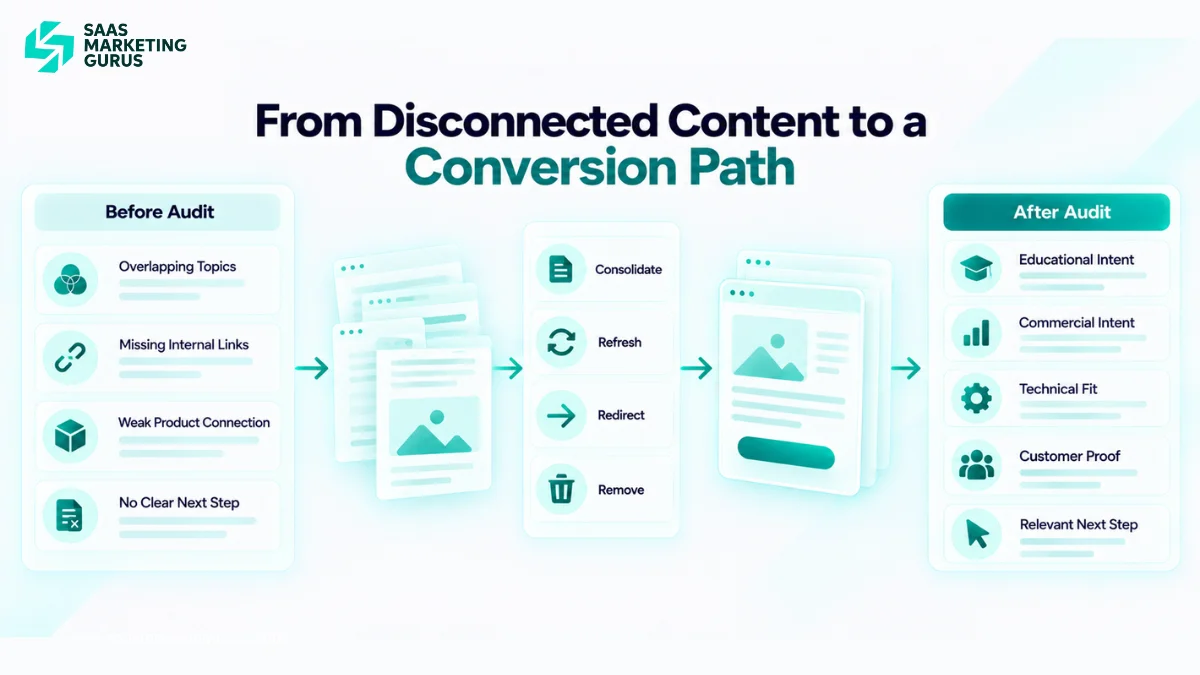
- Content audit: keep, refresh, merge, redirect or remove decisions for existing URLs.
- Intent map: each topic matched to a buying stage and a content format.
- Cluster architecture: pillar pages, supporting posts and internal links by topic.
- Distribution plan: search, Reddit, Quora, newsletters and AI answer engines.
- Measurement: conversion tracking, demo attribution and a review cadence.
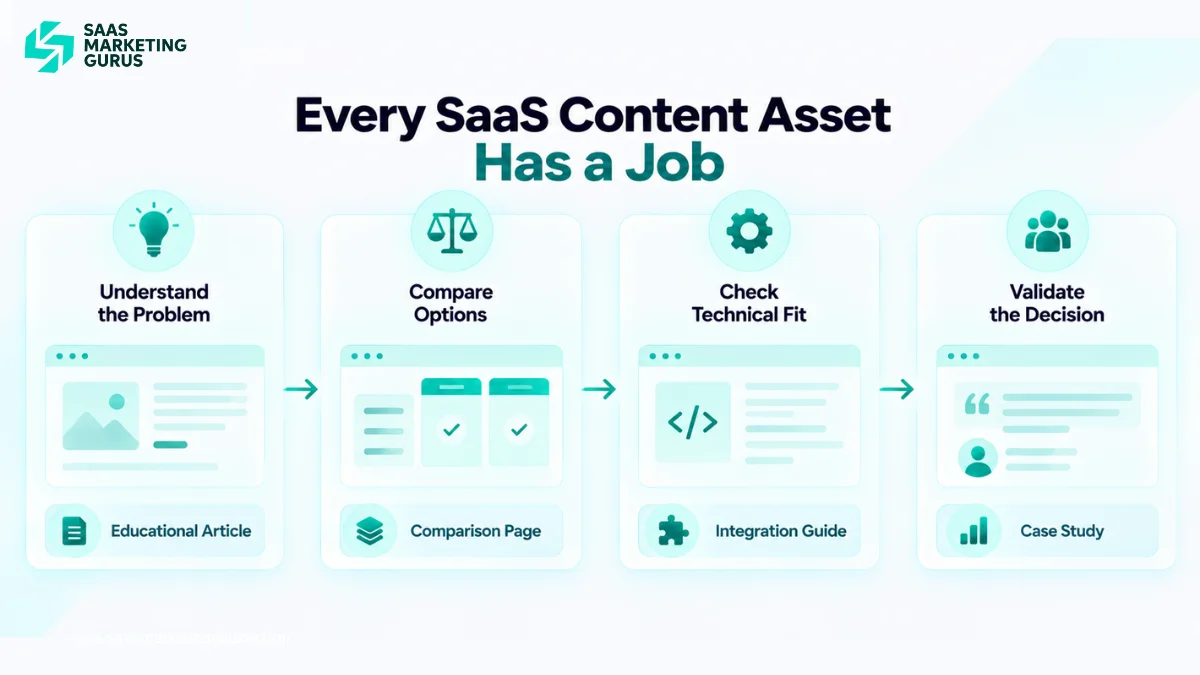
Each asset should have a job and a next step. A problem article introduces the issue, a comparison page helps buyers weigh options, an integration guide answers technical fit questions, and a case study gives the economic buyer evidence. Our SaaS content marketing strategy guide walks through this system from the inside.
Why Do Generic Content Programs Fail SaaS Companies?
Generic content programs fail SaaS companies because they chase search volume instead of buying decisions. Traffic rises, but the audience has little reason to evaluate the product, so demos stay flat.
The pattern is common across B2B. According to the Content Marketing Institute’s B2B Content and Marketing Trends: Insights for 2026 report (October 2025), the top challenge B2B marketers named was creating content that prompts a desired action such as conversion, cited by 40% of respondents. A third said they struggle to measure content effectiveness.
SaaS content needs stronger commercial links. A project management platform should not stop at “what is project management?” It needs content on software comparisons, migration, integrations, workflow design, implementation, pricing questions and use cases, because those topics mirror the decisions buyers actually make.
At SMG, we score topics with our CLARITY framework: Customer Problem, Level of Intent, Alignment With SERP, Revenue Potential, Independent Page Value, Topic Connection and Yield Measurement. Ask any agency you evaluate for an equivalent written method. If it cannot explain why a topic earns a slot, the calendar is guesswork.
How Do SaaS Buyers Research Before They Book a Demo?
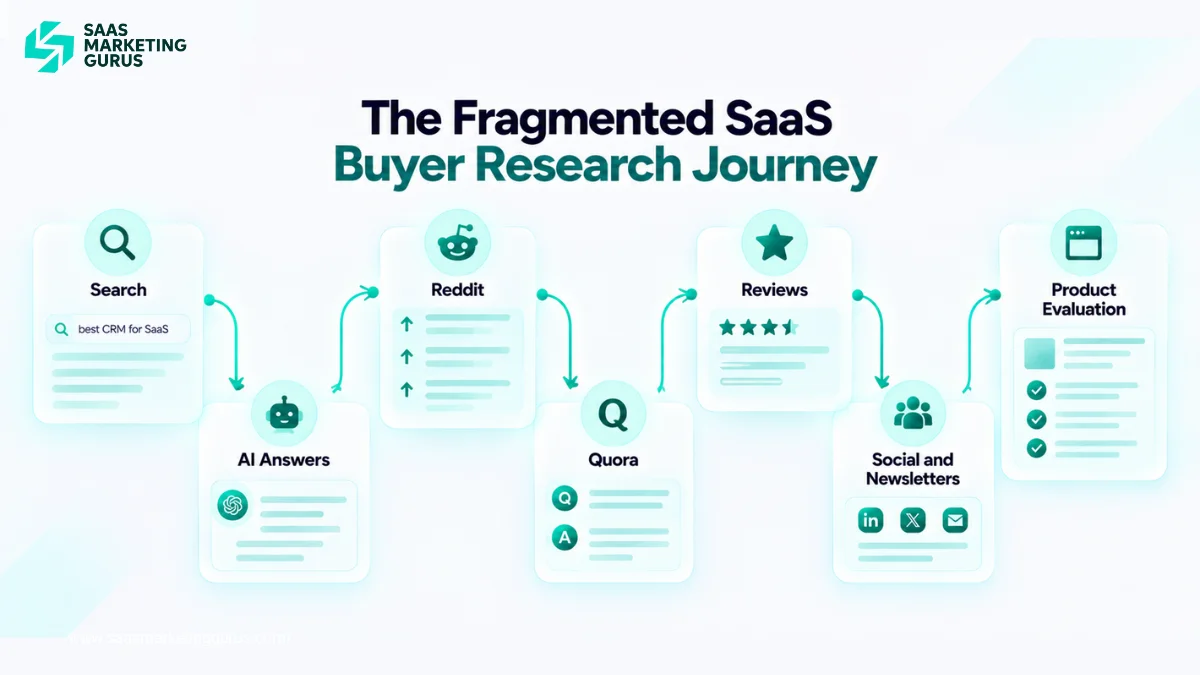
SaaS buyers research mostly on their own, across search, communities, review sites and AI assistants, before they speak to sales. Your content strategy has to meet them in each of those places, not only on your blog.
Gartner reported in March 2026 that 67% of B2B buyers prefer a rep-free buying experience, based on a survey of 646 buyers run in August and September 2025. In the same survey, 45% said they used AI during a recent purchase. By the time a buyer books a demo, much of the shortlist is already set.
That changes what an agency should plan for. Search is one layer. Community threads, review platforms, newsletters and AI answers also shape discovery, so the strategy needs a plan for each surface the ICP actually uses.
How Should Reddit and Quora Fit Into a Content Strategy?
Reddit and Quora should work as research inputs and credible distribution channels, not places to paste article links. Buyers describe problems there in their own words, which gives you topics and phrasing that keyword tools miss.
A capable agency mines those threads for objections and comparison questions, then feeds them into briefs. It also participates in a way each community accepts. SMG runs Reddit marketing for SaaS and Quora marketing as part of the same buyer-question research that shapes on-site content.
What Does GEO-Ready Content Structure Look Like?
GEO-ready content answers one question per section, directly, in a passage that still makes sense when quoted on its own. It names entities clearly, supports claims with dated evidence and adds original examples.
Google’s Search Central guidance on AI features (updated August 2025) says standard SEO best practices still apply to AI Overviews and AI Mode. It also explains that these features can run multiple related searches across subtopics to build a response, so pages that answer those subtopics cleanly give the system more to work with. Our AEO and GEO guide for SaaS covers the structure in detail.
Where Does Comparison Content Fit?
Comparison content serves buyers who already understand their problem and are weighing solutions. It should explain meaningful differences, best-fit use cases, limitations, integrations, pricing considerations and the next step for each type of buyer.
Ask agencies how they write comparisons that stay fair to competitors. One-sided pages lose trust with buyers and rarely get quoted in AI answers.
What Should You Look For in a SaaS Content Strategy Agency?
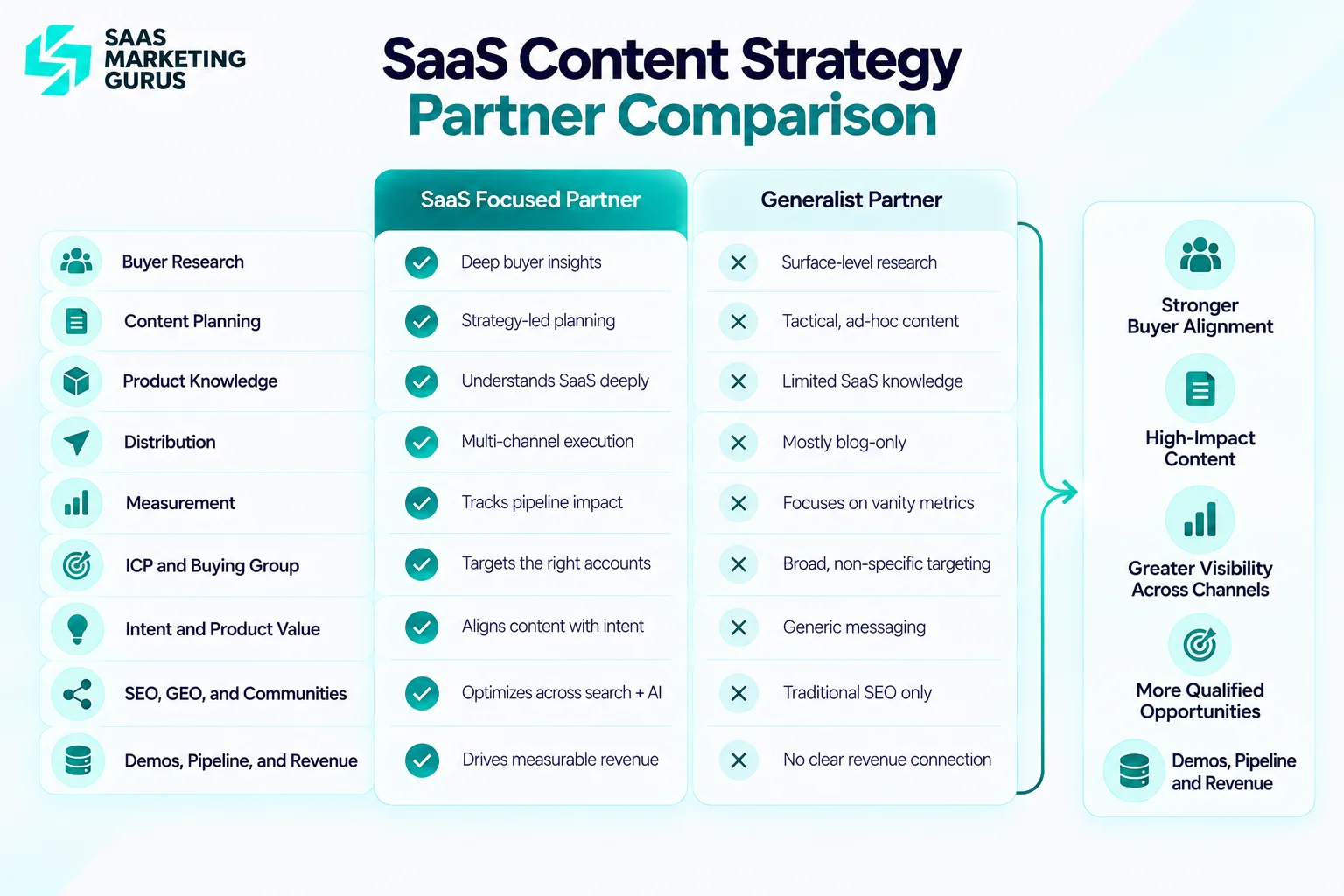
Look for an agency that proves SaaS buyer knowledge, plans by intent rather than volume, connects content to distribution, and reports on demos and pipeline. The table shows how a SaaS-focused partner typically differs from a generalist.
| Criterion | SaaS-focused partner | Generalist partner |
|---|---|---|
| Buyer research | Studies the ICP, buying group, objections and sales process | Relies on broad personas and keyword data |
| Content planning | Maps content to intent, product value and funnel stage | Builds a calendar around search volume |
| Technical knowledge | Explains the product, integrations and implementation | Needs extra support on technical detail |
| Distribution | Connects SEO, GEO, communities, social and sales enablement | Focuses mainly on publishing blog posts |
| Measurement | Tracks qualified leads, demos and pipeline influence | Reports traffic, rankings and output |
To compare shortlisted agencies side by side, use a weighted scorecard. The weights below are our editorial recommendation for a demo-led B2B SaaS company, so adjust them to your motion.
| Criterion | Suggested weight | Score 1 to 5 on |
|---|---|---|
| SaaS buyer and product understanding | 25% | How well they explain your category and objections unprompted |
| Strategy method | 20% | A written prioritization method, including what to cut |
| Proof of pipeline impact | 20% | Case studies with baseline, work done, timeframe and result |
| Distribution and AI search coverage | 15% | A plan beyond the blog: communities, AI answers, sales enablement |
| Measurement setup | 10% | Conversion tracking and attribution before scaling content |
| Team and access | 10% | Who does the work, and access to subject matter experts |
If you are also deciding whether to build the team internally, our comparison of agency vs in-house marketing covers the trade-offs.
Which Questions Should You Ask Before You Sign?
Ask questions that force the agency to show its reasoning on your business, not recite its process. A strong answer names your buyers, your competitors and a specific decision.
- Which of our existing pages would you merge, redirect or remove, and why? A strong agency reviews your sitemap before the call.
- Who are our top three competitors, and where does their content beat ours? Listen for specifics, not category clichés.
- How will you use sales calls and lost-deal notes? Buyer language should come from real conversations.
- How do you decide a topic deserves its own page? Expect a written method, not “search volume.”
- What is your plan for Reddit, Quora and AI answers? “We publish on the blog” is not a distribution plan.
- What will you report monthly, and which metric is primary? Demos or qualified pipeline should lead, with traffic as a supporting signal.
- Who writes, who edits and who talks to our subject matter experts? Meet the people who will do the work.
Score each answer against the weighted table above. Agencies that can only answer in general terms have not done the homework a real engagement needs.
What Are the Red Flags in a Content Strategy Proposal?
The biggest red flag is a proposal that leads with a number of posts per month instead of a diagnosis of your market. That structure signals a content factory, where volume is the product.
Watch for these signs:
- Pricing tiers sold by article count, identical for every client.
- No content audit or pruning plan for existing pages.
- Keyword lists with no mapping to buying stage or product value.
- Reporting limited to traffic, rankings and output.
- Case studies with charts but no baseline, timeframe or business outcome.
- Guarantees of rankings or AI citations, which no agency controls.
One red flag is not always a dealbreaker. Three or more usually means you are buying production, not strategy.
How Much Does a SaaS Content Strategy Agency Cost?
SaaS content strategy agency cost depends on scope: strategy depth, production volume, technical review, distribution, reporting, and the number of products or markets involved. Compare quotes by what each includes, not by the monthly figure alone.
Most engagements fall into one of three shapes:
| Engagement model | What it usually includes | Best fit |
|---|---|---|
| Strategy project | Research, audit, intent map, cluster plan and briefs | Teams with in-house writers who need direction |
| Strategy plus production | The above, plus writing, editing and refreshes | Teams without writing capacity |
| Strategy, production and distribution | The above, plus Reddit, Quora, GEO and conversion work | Teams that need content to drive demos across channels |
A low-cost package often covers article production only. When you compare quotes, list the deliverables side by side and ask what happens to research, briefs and drafts if the engagement ends. You should own all of it.
Our SaaS marketing budget guide shows how to size content spend against other channels.
What Proof Should a Content Strategy Agency Show You?
Credible proof connects a business problem to a measurable outcome, with the starting point, the work done and the timeframe stated. A traffic chart alone does not show whether visitors became buyers.
Ask for case studies in your category or buying motion, and ask which parts of the result the agency directly influenced. As an example of the reporting standard to expect, SMG publishes results such as +20 demos per week for a FinTech CRM after improving its visibility across search and comparison queries, and a 400% SEO ROI for a DevOps tooling company. These are historical results for specific clients, not guarantees for a new engagement.
If an agency cannot share named results, ask for anonymized ones with the same detail. Vague claims without a baseline should score low on your table.
What Should the First 90 Days Look Like?
The first 90 days should produce research and decisions before volume. If you only receive articles in month one, the agency skipped the strategy you are paying for.
| Timeframe | What you should see |
|---|---|
| Days 1 to 30 | ICP and sales-call research, content audit with keep, merge and redirect decisions, conversion tracking checked |
| Days 31 to 60 | Intent map, cluster plan, first briefs, first refreshes of high-potential pages, distribution plan for communities and AI answers |
| Days 61 to 90 | New bottom-of-funnel pages live, first community and AI-answer activity, a report on leading indicators and demo attribution |
Rankings and pipeline take longer than 90 days to settle, so judge this period on the quality of decisions and whether tracking works. Set a review point with the agency at day 90 to agree what the next quarter should prove.
Conclusion
A content strategy agency earns its fee when its decisions change what buyers find, not when it fills a calendar. For most demo-led SaaS companies, the right first choice is a SaaS-focused partner that pairs buyer research with distribution across search, communities and AI answers, and reports on pipeline.
A strategy-only project makes more sense if you already have strong writers and only need direction. A generalist can still work for a simple product with a short sales cycle.
Your next step: shortlist three agencies, send each the seven questions above, and score their answers with the weighted table. Choose the one that gives you specific, evidence-backed decisions about your own site, then review progress against the 90-day milestones.
If you want a second opinion on your content plan before you hire anyone, book a free strategy call with SMG and we will show you where your content loses buyers between the first search and the demo request.
Frequently Asked Questions
What does a content strategy agency do for a SaaS company?
A content strategy agency decides which content a SaaS company should create, refresh, merge or remove to help buyers find and choose its product. The work covers buyer research, content audits, intent mapping, cluster architecture, distribution across search, communities and AI answers, and measurement tied to demos and pipeline.
How do I choose the right content strategy agency for my SaaS?
Choose the agency that shows the most specific understanding of your buyers and site. Send each shortlisted agency the same questions, including which pages they would remove and how they report on pipeline. Score answers on a weighted table covering buyer knowledge, method, proof, distribution, measurement and team.
How much does a SaaS content strategy agency cost?
The cost depends on scope: strategy depth, production volume, distribution, reporting and the number of products involved. Strategy-only projects cost less than retainers that include writing and distribution. Compare quotes by listing deliverables side by side, and confirm you own all research, briefs and drafts if the engagement ends.
How long does it take to see results from a content strategy agency?
Expect research, audit decisions and tracking fixes within the first 30 days, and new high-intent pages within 90 days. Rankings, AI answer visibility and pipeline impact usually take longer to build. Judge the first quarter on decision quality and working attribution, then set pipeline targets for the next one.
Should SaaS content focus on SEO or thought leadership?
SaaS content should use both, because they do different jobs. SEO content captures existing demand from buyers already searching for solutions. Thought leadership builds expertise and creates new demand. A good strategy connects both to the same buyer problems and product priorities, so each format moves readers toward a demo.
What is the difference between a content strategy agency and a content writing agency?
A content strategy agency decides what to publish, update or remove and how each piece supports revenue. A content writing agency produces articles to a brief someone else provides. Many SaaS teams need both, but hiring writers without a strategy usually produces traffic that does not convert into demos.